Creating a guidebook for gravel riders and bikepackers is no small undertaking. Which routes should be included? How can you ensure they are completely legal and have the necessary landowner permissions? Is it possible to make them accessible via public transport? And how do you strike the right balance between demanding routes and those suitable for riders who are new to gravel riding? Then there’s the question of which photographs best capture the experience. Olly spent a day riding with first-time guidebook author Jordan Matthews to gain insight into the process and to preview one of the routes.
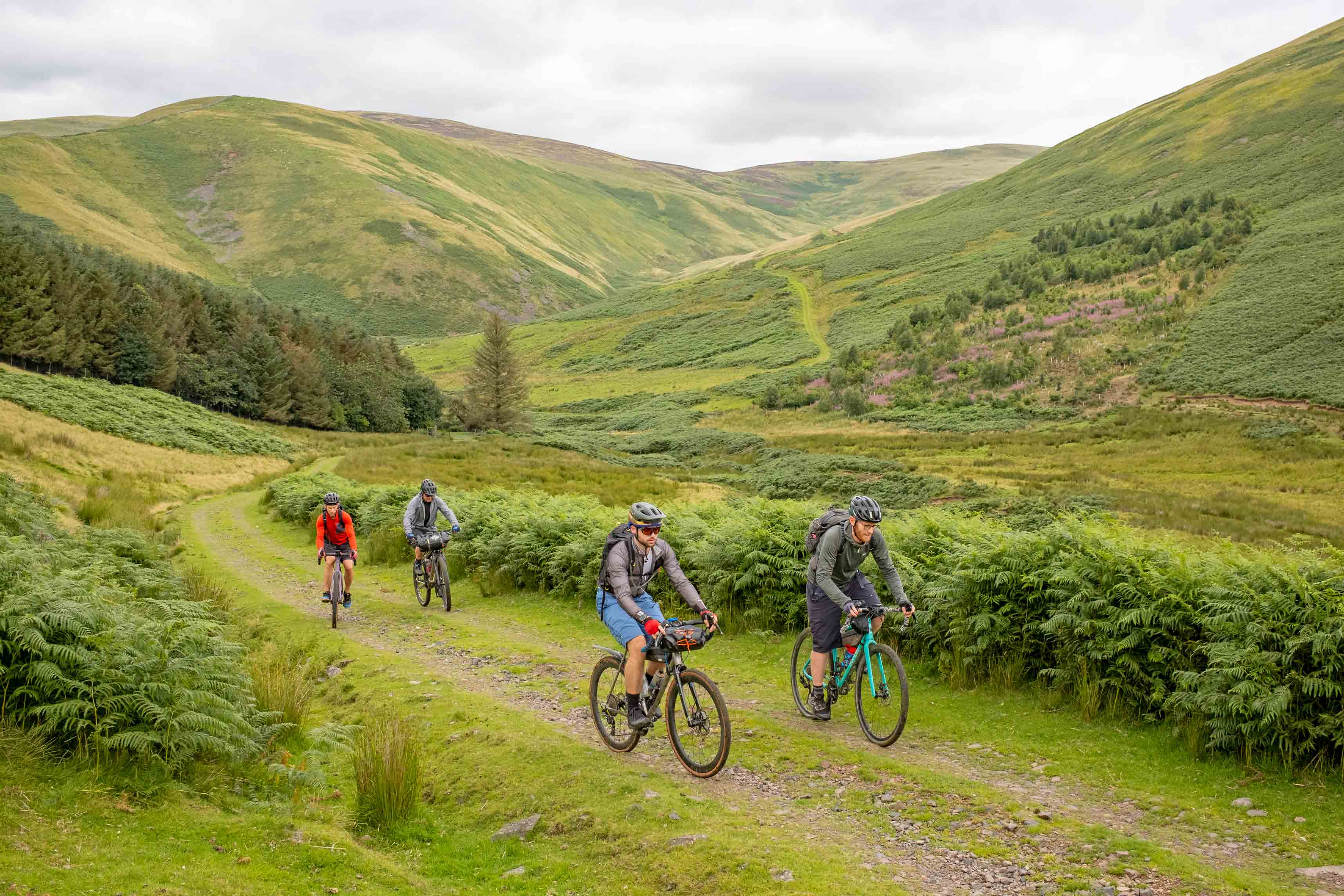
Image courtesy of Phil Thomas
“Do you fancy meeting up and testing one of the routes in my new book?” I’d first met Jordan in a car park popular as the start location for road and gravel rides back in the summer of 2025. He was about to head out to reccie one of the rides he was planning on including in his book, Gravel Rides Northumberland. We only had the briefest of conversations, but we had made plans to keep in touch. At the start of this year, Jordan contacted us to say that his guidebook was nearly ready and to see if I fancied joining him on a test ride on one of the routes. The team at Gravel Union have reviewed plenty of guidebooks over the past four or five years, but this was the first one that covered our local patch.
January in the north of England is not well known for being exactly hot and sunny, so it was with a slight air of trepidation that Jordan and I set a date for our meet-up. The forecast for the days before our planned ride had been appalling, so my expectations had been set accordingly. I figured that actually riding a route in poor weather was the perfect test – it would allow me to assess how well the route held up in wet conditions, whether there were any bail-out options if it got really bad and whether it would actually be fun. The route we’d gone for was #7 in Jordan’s book – Tyne & Derwent Valleys. He’d categorised the route as “straightforward”, but there were also four “easy” routes and five “challenging” routes included in his book. The start point was the village of Wylam, 30 minutes easy pedalling for me, riding from Gravel Union Towers and a short train ride for Jordan from his base in the south of the region. I knew the trails around Wylam really well as they are practically on my doorstep, so it was going to be really interesting to see which trails Jordan had included and how he had linked them together. Jordan has tried to include public transport options for as many of the routes as possible in his book and this one was a perfect example – the nearest railway station was a few hundred metres from the start point.
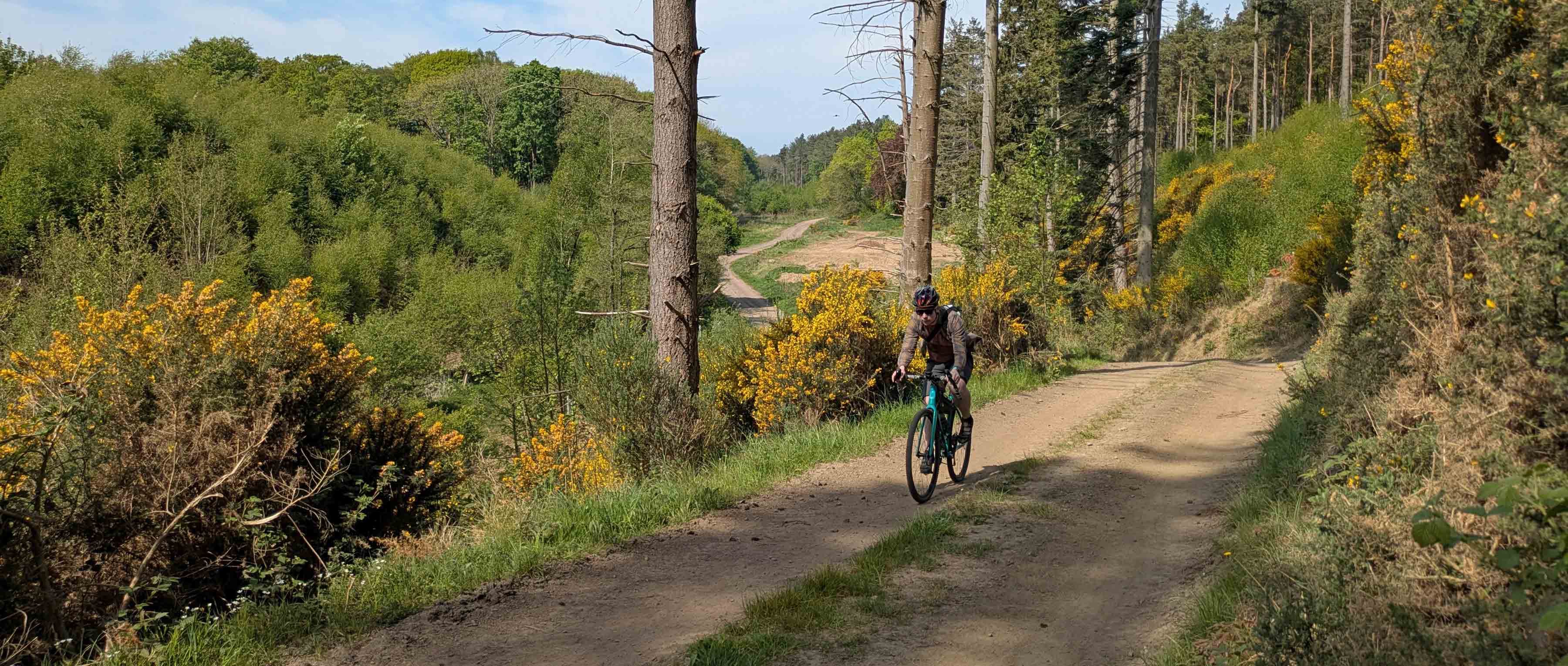
Image courtesy of Phil Thomas
Although the title of Jordan’s book is “Gravel Rides Northumberland”, the subtitle is “15 gravel bike adventures in North East England” and this was a deliberate choice, as it gave Jordan slightly more latitude to include routes that aren’t actually inside the county boundaries of Northumberland. The ride he had selected for us to try as the preview was a perfect example. While the start point and the first half of the route are inside Northumberland, the second half of the route skips over the border into the adjoining county of Tyne & Wear. There are a couple of other routes in the book which dip south into County Durham, and one, the Cheviot Orbital, which takes riders over the border into Scotland.
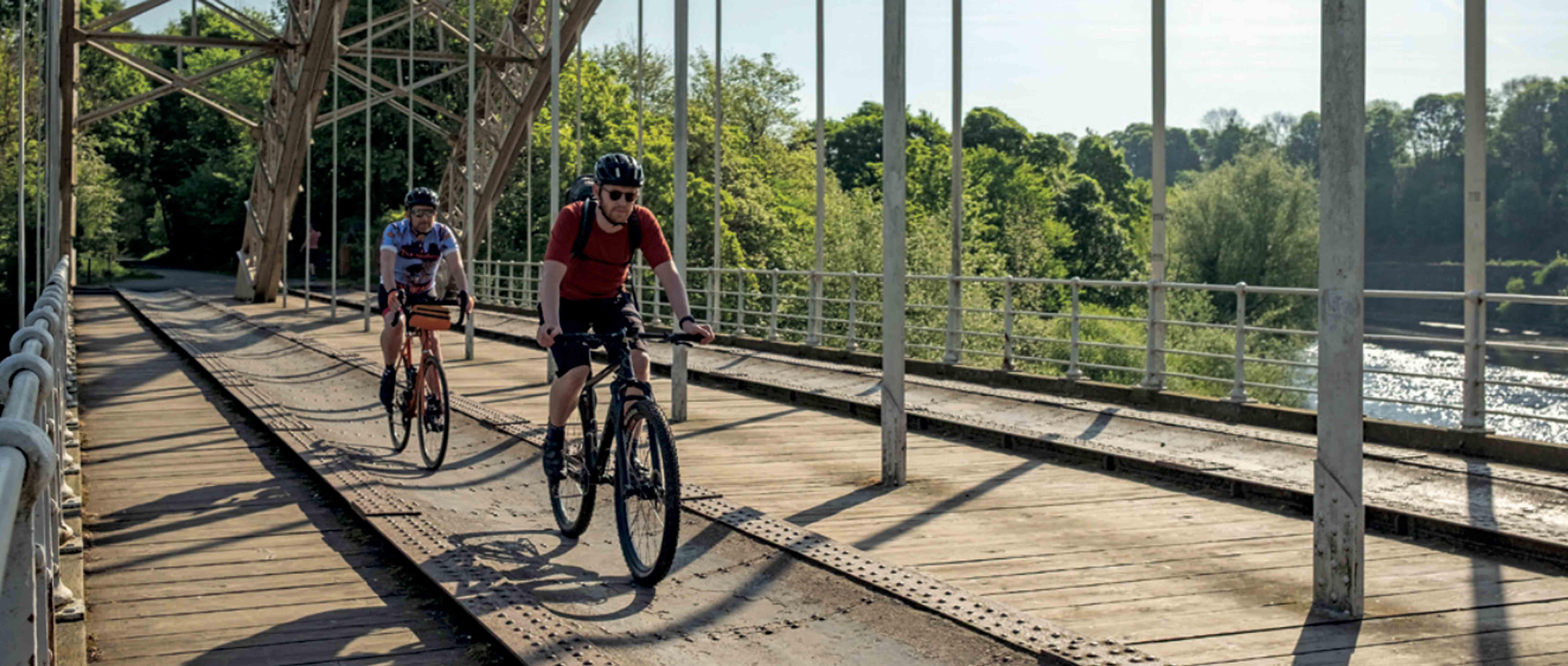
Image courtesy of Phil Thomas
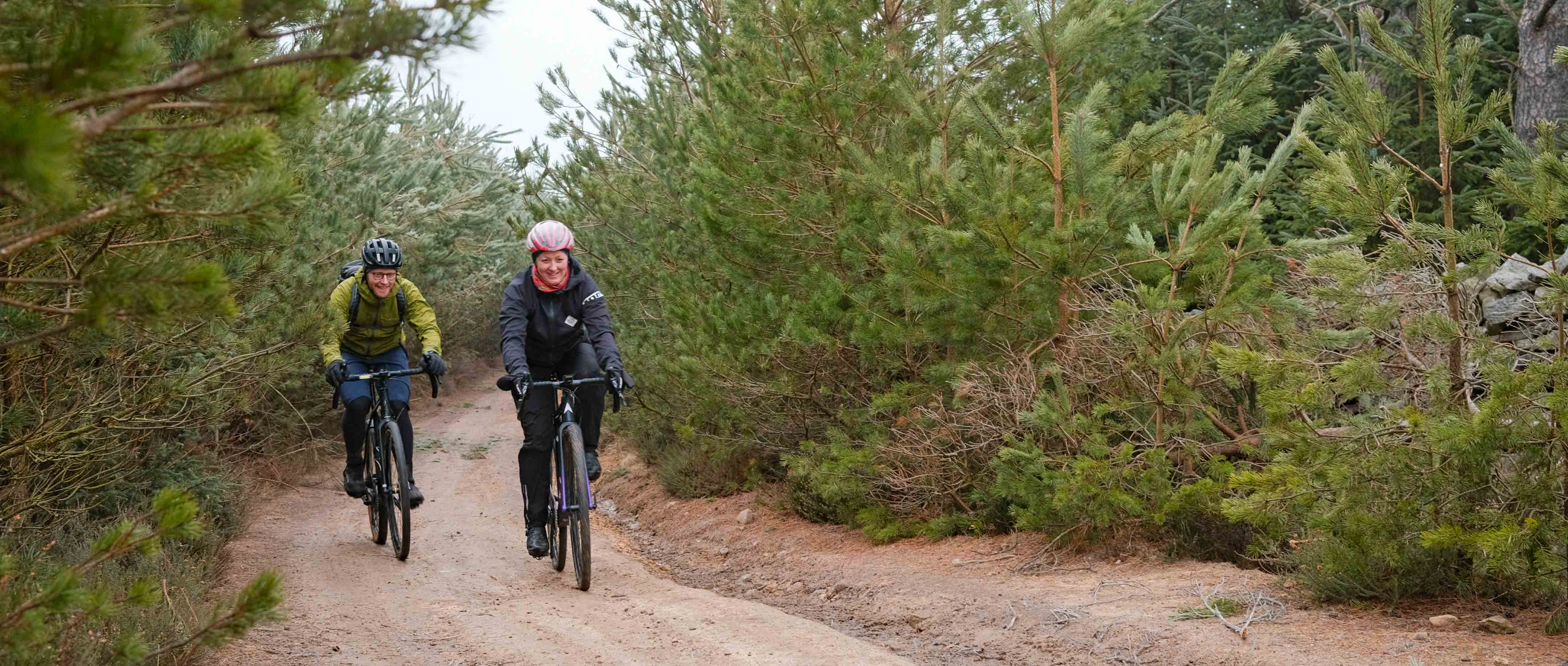
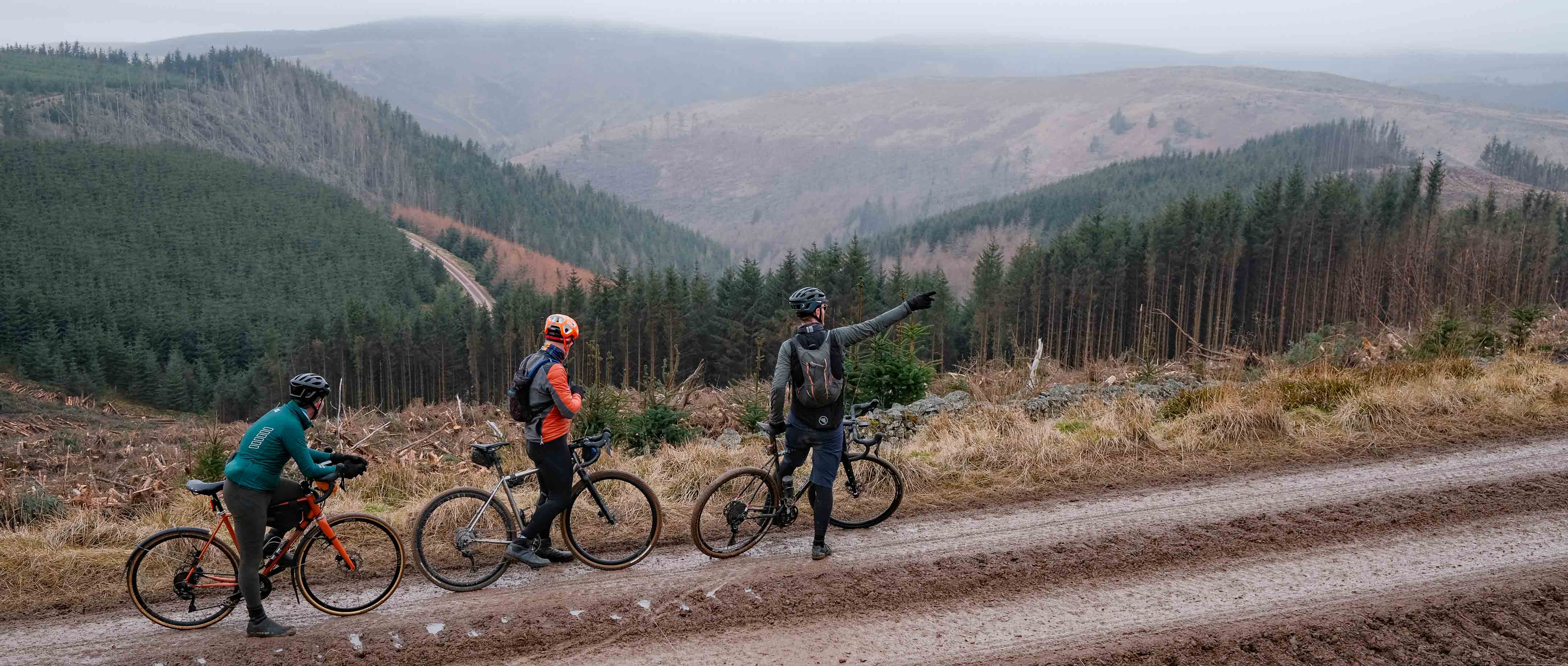
The route we were testing had a relatively modest overall length of 40 km (25 miles) and included 760m of climbing. What it lacked in length, it more than made up for in variety. We started off with a billiard table smooth shared use trail, but we also tackled vehicle-width forest roads, farm tracks, converted railway paths, minor roads, woodland trails and one short section on a busier road. Despite being only a short train ride (or a slightly longer bike ride) from the centre of Newcastle, the route was remarkably rural and highlighted just how fortunate we are in the north-east of England to have fantastic gravel-riding opportunities right on our doorstep.
As we rode, at least on the initial flat section, Jordan and I chatted about the research and due diligence process that he had gone through in order to put the routes together. England and Wales have an incredibly tortuous Public Rights of Way system, but in essence, cyclists are only legally allowed to ride on bridleways, restricted byways and byways open to all traffic. This equates to less than 25% of the network of trails available to walkers/ramblers. There are frequent examples in the region of trails where the legality changes partway along their length, either due a boundary change to an adjoining parish or because the legal status of the trail was not recorded accurately on the historical Public Rights of Way map for the area.
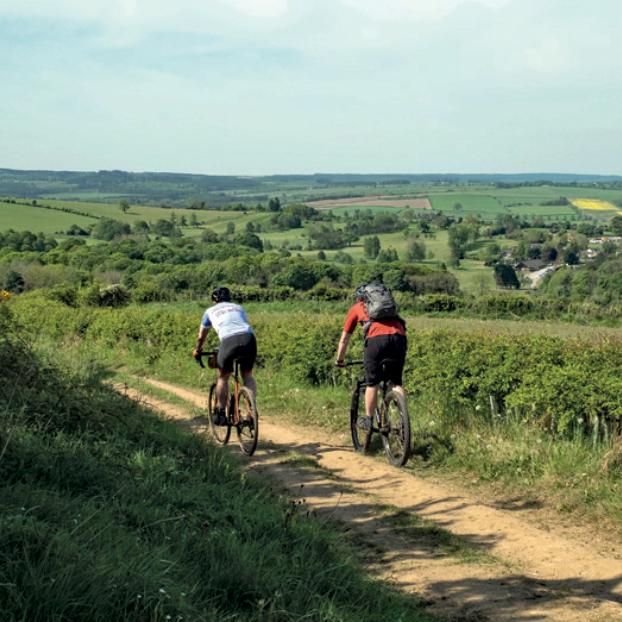
Image courtesy of Phil Thomas
Jordan showed me a perfect example of this on the first away-from-the-road trail that we rode. The trail is an ancient vehicle-width farm track, which initially is marked as a restricted byway on the definitive rights of way map for the area (meaning it’s perfectly legal for cyclists to access), but which changes to a footpath once it reaches the banks of the River Tyne. As a ‘user’ of one of Jordan’s routes, you might not even consider why he has chosen the sections of the trail that he has included in each route, but staying 100% legal is part of his remit as the author. He also made the effort to contact all the landowners where the route would cross land that they owned. This isn’t a legal requirement, but it was all part of the due diligence process that Jordan went through. When he was creating the routes, Jordan was offered advice and insight by local access campaigner and published guidebook author Ted Liddle. Thanks to his years of working as a campaigner for better access rights, Ted has an amazing knowledge of which trails are legally available to cyclists in the region.
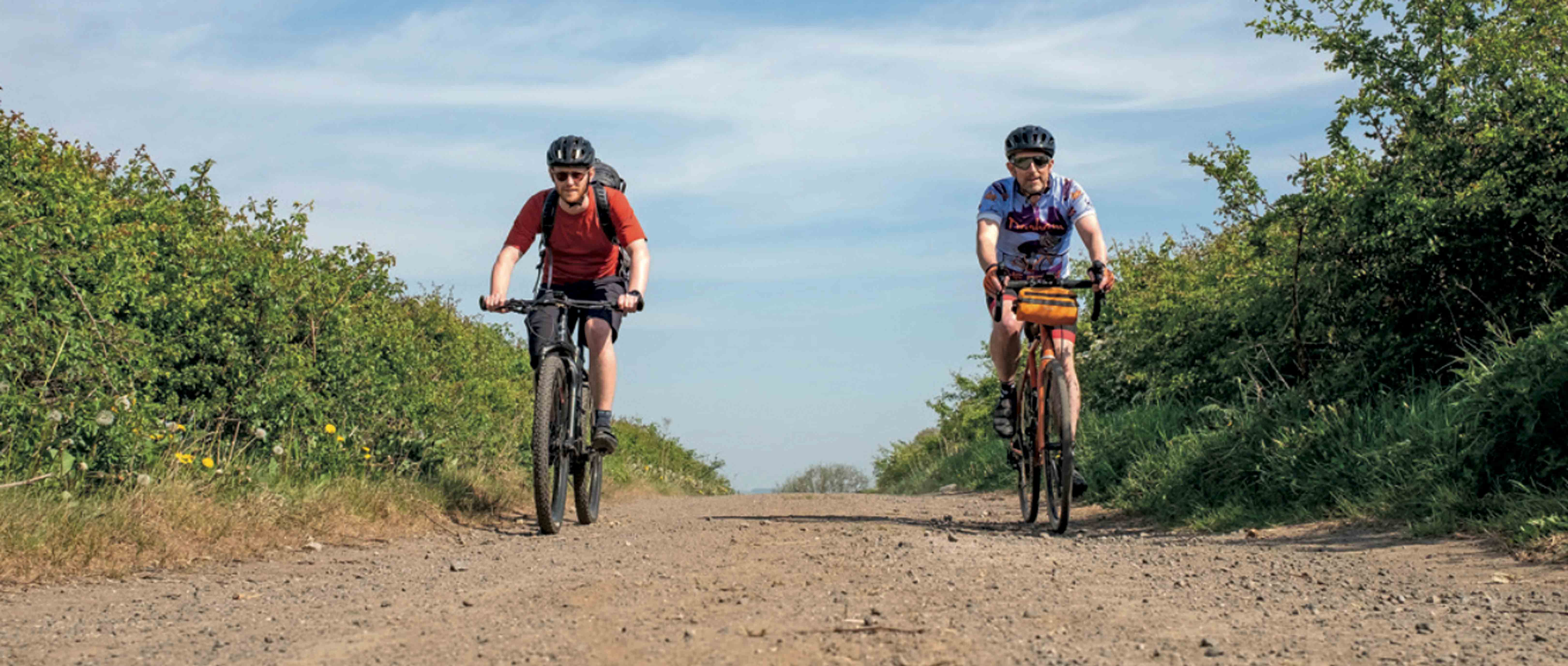
Image courtesy of Phil Thomas
Normally, when we get a guidebook in to review, we’re reviewing the book without always having detailed knowledge of the actual tracks that each route utilises. What was interesting about riding with Jordan was seeing which trails he had selected to make up the route and which direction he was suggesting people ride them in. There were a couple of occasions where I thought, “oooh, that’s interesting, I always ride the opposite direction along here.” Of course, Jordan’s remit as guidebook author is different to mine if I’m planning a solo route or a ride with a group of friends. He has to think about the big picture – introducing riders who are potentially from outside the area to some new trails, showcasing the best that an area has to offer, always staying as close as possible to the grade of the route and also thinking about which trails will stand up to increased level of use if his book becomes a sell-out success and riders flock to the region! Jordan told me that while the environmental impact of increased numbers of riders isn’t his number one priority when choosing which trails to include, it certainly is high up on the list of the factors he considered and this particularly applies with altering weather patterns. The UK, like many parts of northern Europe, is seeing significantly higher levels of rainfall in the winter and hotter, drier summers. The weather could have a huge impact on the condition of the trails, so he thinks carefully about how trails will hold up to higher rider numbers in wet conditions. We tested this perfectly and squelched our way around the route, with the rainfall getting ever heavier as we progressed.
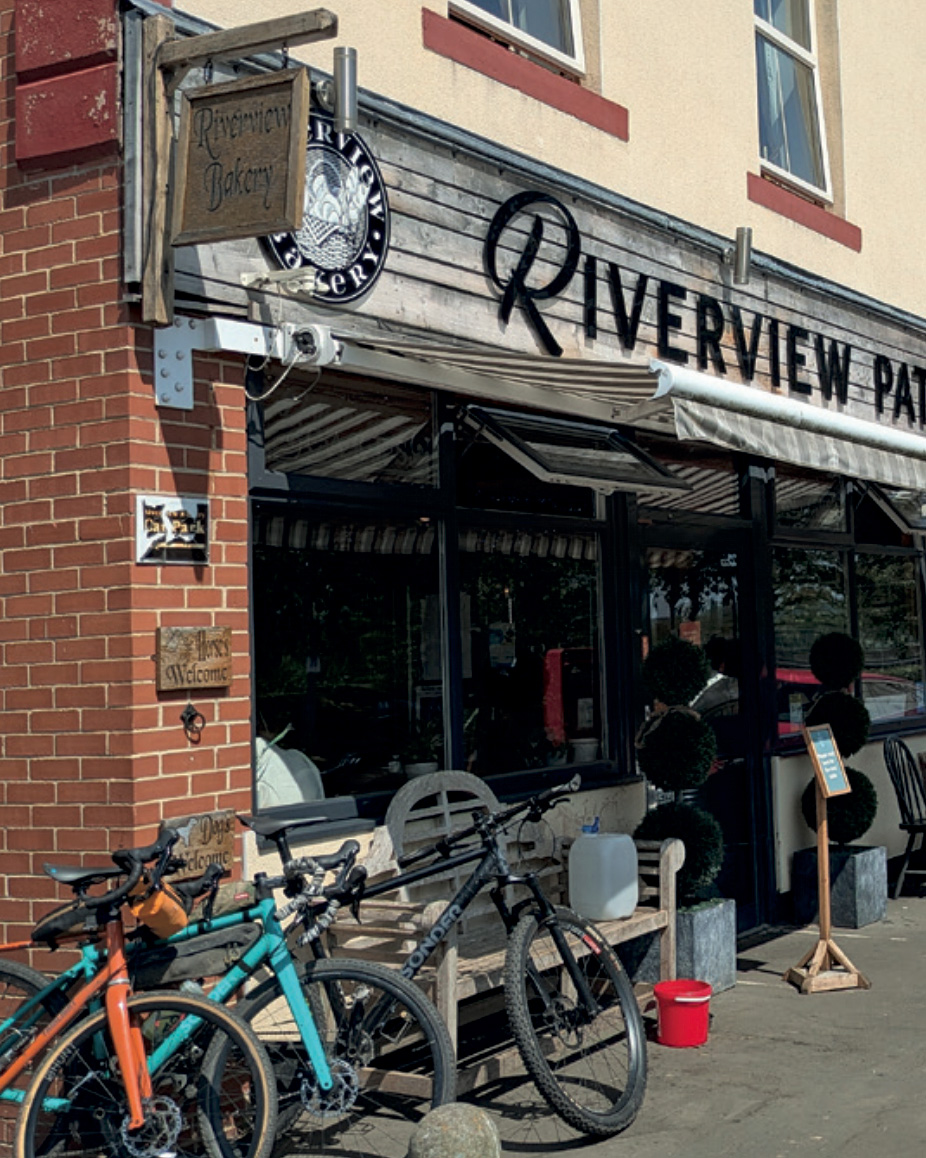
A good gravel route (in my view, anyway), should always include a decent café stop. Jordan had included a list of potential stop-offs, including shops, cafes and pubs that could be found close to, or actually on, the route. Generally, I would stop partway through a ride, but Jordan sensibly suggested that, as the weather was so grim, we had a stop at the end instead. That way, once we had finished our café stop, we would have less distance to travel and we wouldn’t have to spend unnecessary amounts of time trying to get warm again. On our ride, he suggested somewhere that I had not visited before, Bradley Gardens Café in Wylam. The café is situated inside the 19th-century glasshouse that was historically used to grow fruit for the nearby Bradley Hall. I had always assumed that it was much too upmarket to be considered as a suitable stop for cyclists, but despite the fact we turned up dripping wet and looking pretty dishevelled, the staff were lovely and the food was great. Even if Jordan’s route hadn’t been new to me, the café certainly was, but it will definitely be included in my list of stops from now on!
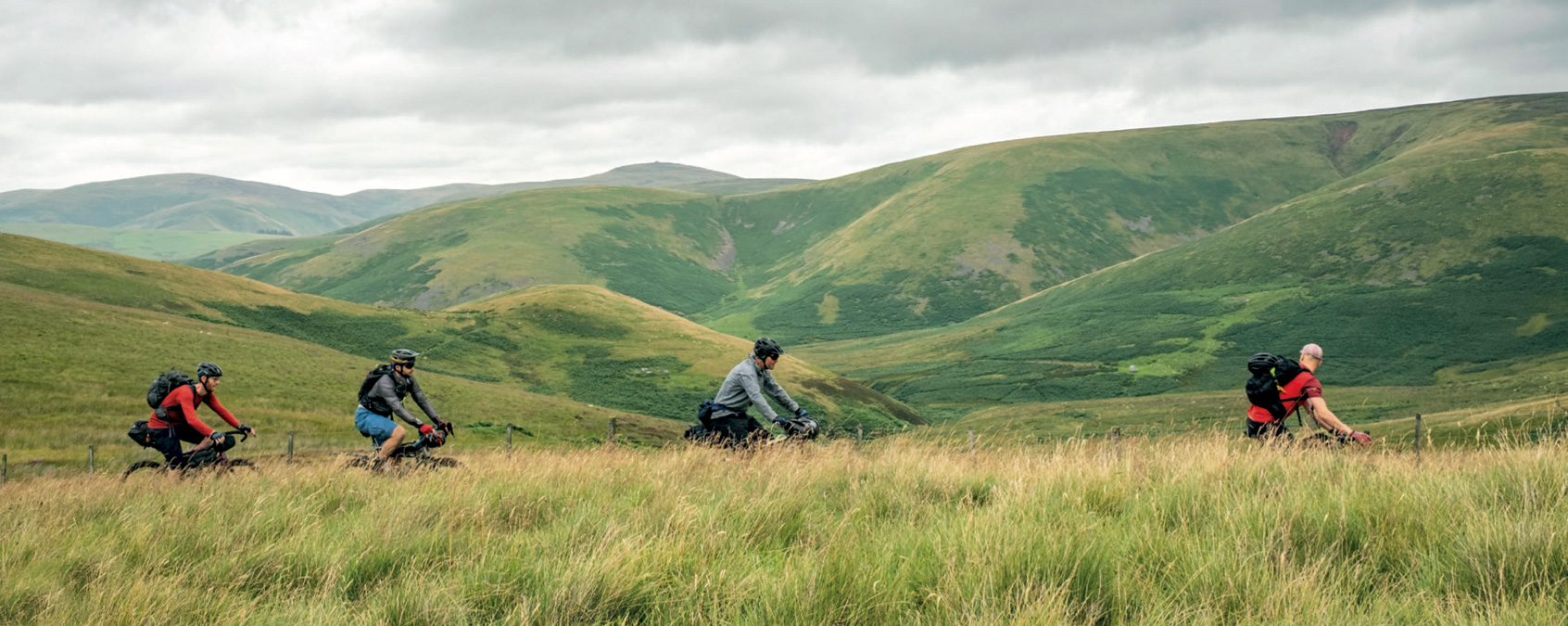
Image courtesy of Phil Thomas
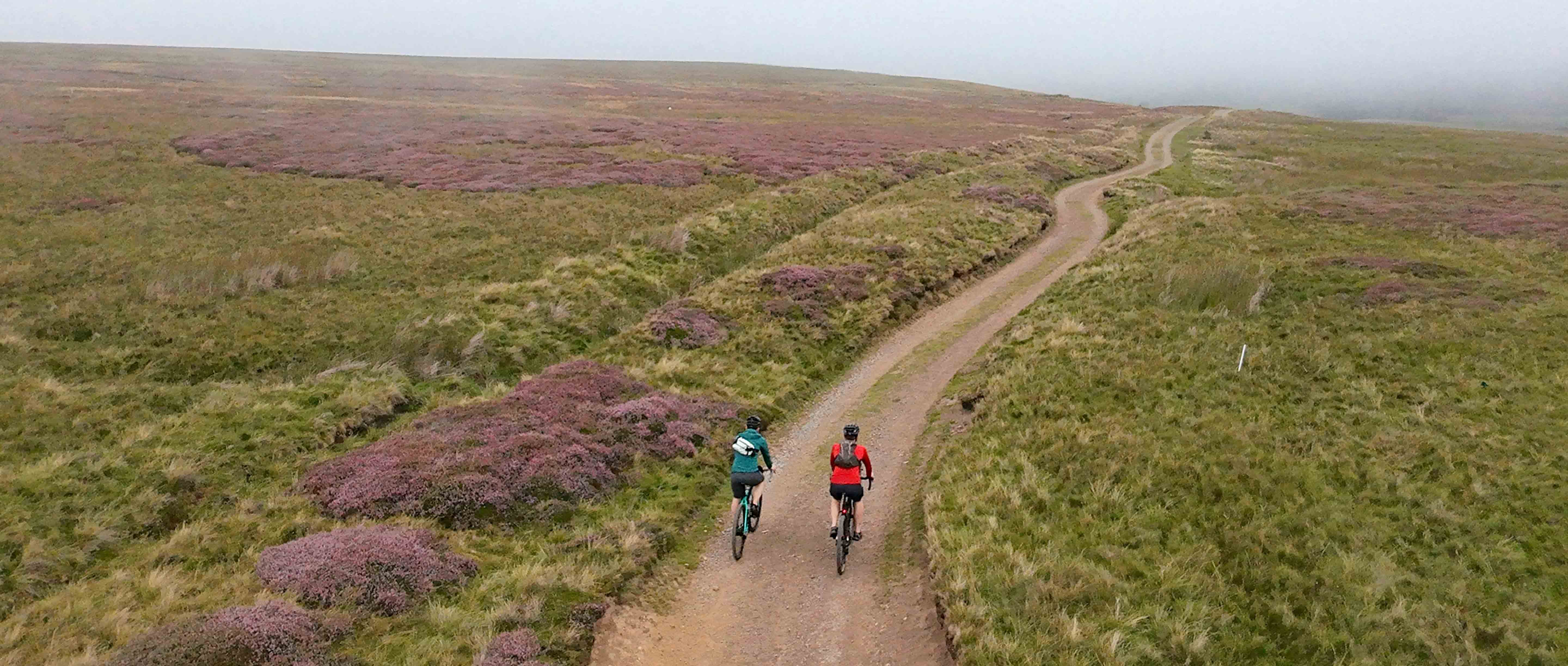
While I only got to sample one of Jordan’s routes while creating this story, there are plenty of other intriguing-looking ones included in his book. The one that really grabbed my attention was the last one – The Cheviot Orbital by Gravel Bike. Ironically, this is the only route in the book that Jordan didn’t create himself – the Cheviot Orbital was the brainchild of Ted Liddle, but it was designed by Ted for mountain bikers. Jordan tweaked the route slightly to repurpose it for gravel riders. It’s a monster of a route, although the bare stats might belie this – 104.3km/64.8 miles long and 2,200m of climbing. Having ridden sections of the route on different rides of my own, I know just how tough Cheviot kilometres are and Jordan warned me that there would be sections where we might well need to push our bikes. In his guidebook, he suggests splitting it into two, with an overnight stop over the border at Scotland in the village of Kirk Yetholm. I must have a slightly masochistic streak, as I’d love to try and ride it in a day. Obviously Jordan is ‘cut from the same cloth’ as when I mentioned this to him, he said to let him if I was planning to do it, as he’d love to come and join me! Watch this space then….
Images courtesy of Phil Thomas
Whether you’re new to the north-east of England, or a locally based rider looking for some new route inspiration, Jordan’s guidebook, Gravel Rides Northumberland, is an excellent read. With a range of routes, plenty of ancillary information and advice about gear, bikes, rights of way, safety and navigation, there’s plenty to keep you interested. The book is available now, priced at £15.95. You can purchase it direct from the author, from the publisher, or you can find it in most good bookshops.