Only a mad person would willingly enter a cycling event featuring over 50 km of cobbled roads, wouldn’t they? These rough-hewn chunks of granite, laid unevenly and worn down by years of harsh weather and relentless farm traffic, are a far cry from the champagne gravel riding utopia that we all dream about. Yet for some, they hold an irresistible pull. Olly finally gives in to this long-standing urge, taking on the brutal pavé of the “Hell of the North” in the Paris-Roubaix Challenge. Keep reading to see if he survives.
" All around us, thousands of rabid cycling fans were gathered in small clusters, peering down at small, brightly lit screens. "
Modern science would have you believe that light travels faster than sound, but in a field in northern France last weekend, a small group of gravel riders proved that occasionally, a different set of rules applies. The air was so thick with dust that we were caked from head to toe. All around us, thousands of rabid cycling fans were gathered in small clusters, peering down at small, brightly lit screens. There was a sense of anticipation, mixed with nervousness, that was so pervasive you could almost feel it. The roadside fans were waiting for confirmation of whether Wout Van Aert, practically a local seeing as we were so close to the Belgian border, or nailed-on-favourite, Tadej Pogačar, was going to be the “vainqueur” of the 2026 edition of the Hell of the North.
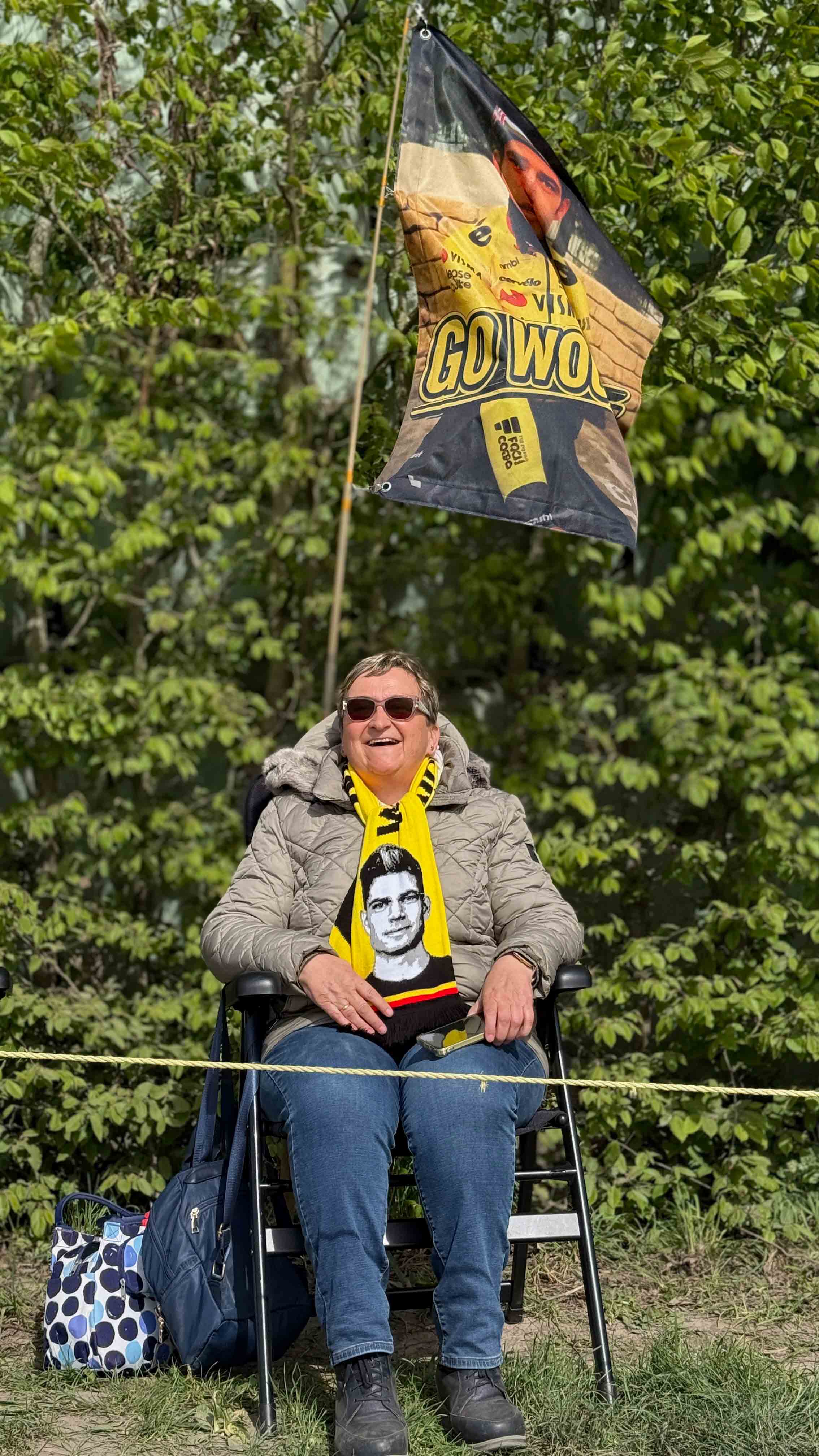
The fact that tens of thousands of people were all logged on to the local 5G mobile network and were all equally desperate to find out the result meant that, of course, the connection kept crashing. In the end, modern science fell behind ancient physics to give us the answer we craved. A roar of celebration, so visceral that it made the hairs on the back of my neck stand on end, rolled across the giant, freshly ploughed field that separated us from the end of the 5* rated Carrefour de l'Arbre stage, where a giant TV had been erected and was live-streaming the race. Somehow, I knew instinctively what the wall of sound meant - Wout Van Aert had finally cast off the ‘eternal-second-place’ jinx that had seemed to plague his professional cycling career for the past few years and had bested unarguably the world’s greatest ever male cyclist to win the 2026 Paris-Roubaix.
" The sheer, unfiltered joy among both locals and visiting fans was unforgettable - people danced by the roadside, countless beers were raised in celebration and everywhere you looked, there were beaming, ear-to-ear smiles. "
For the next minute or so, pockets of fans burst into excited cheers as their own livestreams delivered the same outcome. Moments later, ours flickered back on, confirming it - after 258.3 kilometres of some of the toughest racing in the world, Wout had taken the win by nearly a bike length in a sprint finish. Even now, writing this a few days later, the memory still brings tears of joy to my eyes. There’s no denying that Tadej is a once-in-a-generation talent and his remarkable record speaks for itself. But given the run of misfortune Wout has endured over the past couple of years, it felt like no one deserved the victory more. The sheer, unfiltered joy among both locals and visiting fans was unforgettable - people danced by the roadside, countless beers were raised in celebration and everywhere you looked, there were beaming, ear-to-ear smiles. With Tadej’s dominance in modern cycling, his victory at Paris-Roubaix had seemed almost inevitable. Yet in the end, the closeness of the race finale stood in sharp contrast to many of his other victories.
Of course, getting to watch the world’s top male and female pro cyclists race on these brutal farm tracks at over 50 kph was only part of the reason that we were in northern France. The main attraction was the chance to ride the route ourselves. As with many of Europe’s top one-day bike races, event organisers have realised there is an incredible demand from ‘citizen racers’ to pin on a number and challenge themselves against the same course that their idols would race over the following day. The 2026 edition of the Paris-Roubaix Challenge attracted more than 6000 participants, all keen to take on a version of the ‘parcours’ that the pros would race on 24 hours later.
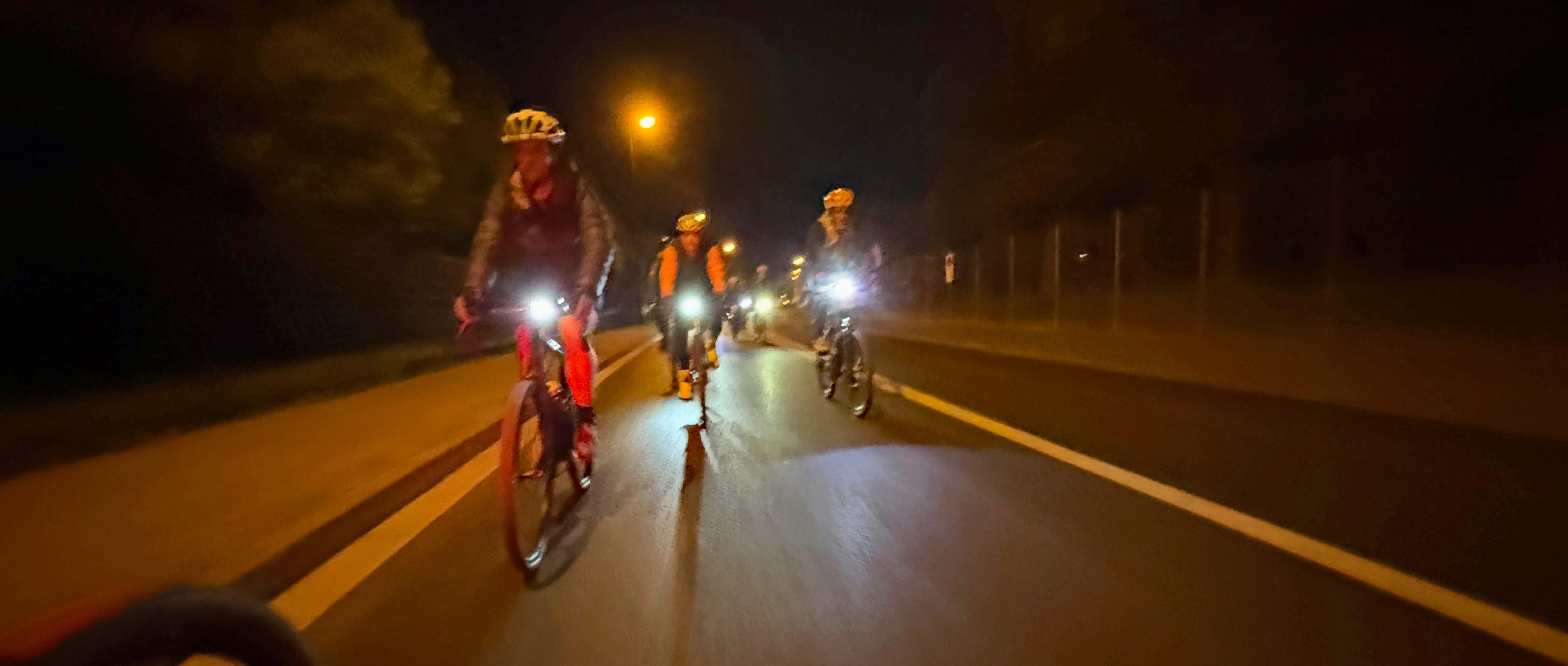
“We need to be rolling by 3.45 am at the latest.” Even as the words came out of my mouth, it gave me something of a sinking feeling – that meant a hideously early alarm call, followed by desperately trying to force down calories and then a cold, dark ride through the streets of Roubaix to get to the meet-up point. As the 170km version of the Paris-Roubaix Challenge (the version that we had signed up for) is an A-to-B route, the organisers had put on an optional ‘body+bike’ transfer service from near the finish in Roubaix to the start line in Busigny. As we rolled towards the designated meet-up spot, cyclists seemed to join us at every junction and by the time we arrived at the vast carpark of a supermarket where the transfer vehicles were waiting, we were already riding in a sizeable peloton.
" We arrived just before 4 a.m. and the queue of people waiting to be loaded onto the awaiting buses and trucks was immense. "
It was only once we got to the meet-up that we had any real grasp of the scale of the event. We arrived just before 4 a.m. and the queue of people waiting to be loaded onto the awaiting buses and trucks was immense. The organisation was super-slick and even the fact that we hadn’t managed to sign on the day before (thanks to a slightly over-ambitious shakedown ride) didn’t faze them. We were allocated a bus and a corresponding truck for our bikes. An army of helpers speedily loaded the bikes into vast split-level trucks, while we found an empty seat on a bus and tried to get a little extra sleep en route to the start.
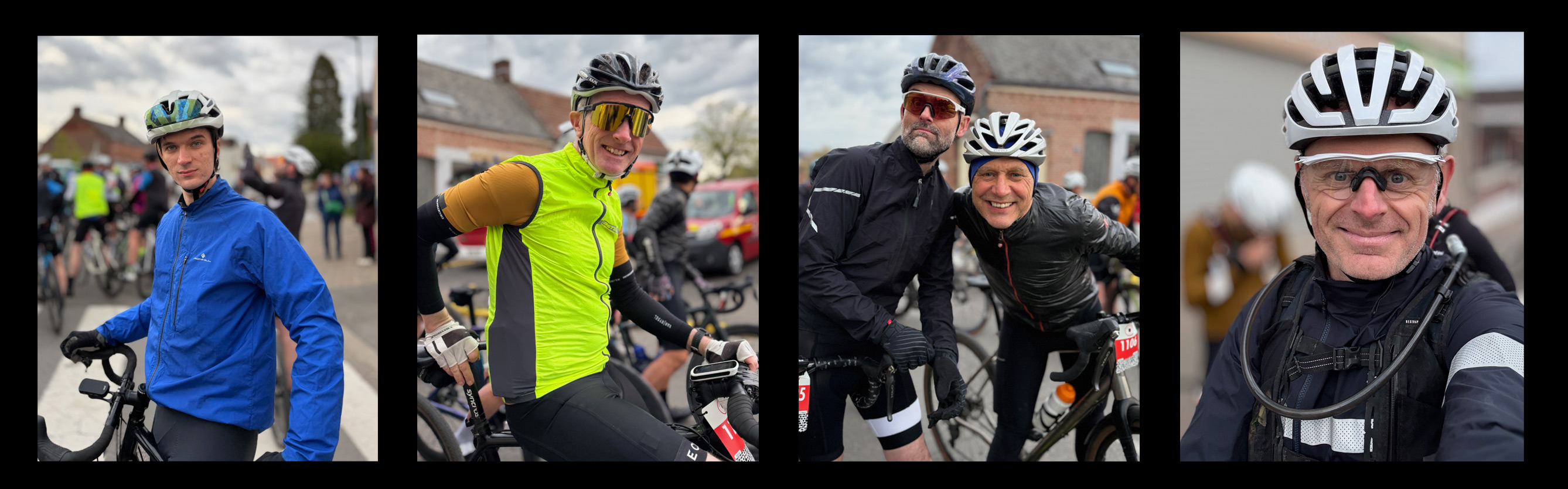
Despite (or perhaps, required by) the immense numbers of people who had signed up for the 170km route, the organisation at the start itself was equally slick. Numerous marshals shepherded us to the sign-on point (to collect our bike and jersey numbers), then after a bit of last-minute bike faff and some better-late-than-never shoving in of extra calories, we headed to the start line. The organisers sensibly realised that setting off many thousands of under-slept, over-caffeinated, overly-excited riders simultaneously was a recipe for disaster, so we were released in blocks of about 20-30.
At a little after 8 am, synchronised with a blast of dry ice and some ‘enthusiastic’ Europop, we rolled across the start line and headed north – our destination the Vélodrome André-Pétrieux in Roubaix. The organisers had gone to great pains to make it clear that the event wasn’t competitive and there was no official timing mechanism, but that didn’t stop our group from setting off in a manner that our pro-race compatriots would have recognised. Fortunately, the terrain was gentle and we had a strong tailwind boosting us down the road.
Amazingly, within a few minutes of departure, despite the fact that we were rolling along at well over 30 kph, small groups of riders came blasting past us as though they were desperate to set record-breaking Strava times. Every junction was marshalled by a high-vis equipped member of the event team and despite the pre-departure warning that the roads were open to traffic and that we had to obey all traffic rules, at 99% of junctions, the marshalls stopped the flow of traffic in order for us to maintain a steady speed. My group of UK-based buddies commented on how incredible this was. In the UK, even professional road races, which have uniformed police officers marshalling the traffic, struggle to get car drivers to give precedence to cyclists, yet here the drivers seemed happy to sit and wait patiently.
" The initial set of cobbles were also relatively evenly spaced, which reduced the terror factor and the stress level significantly. "
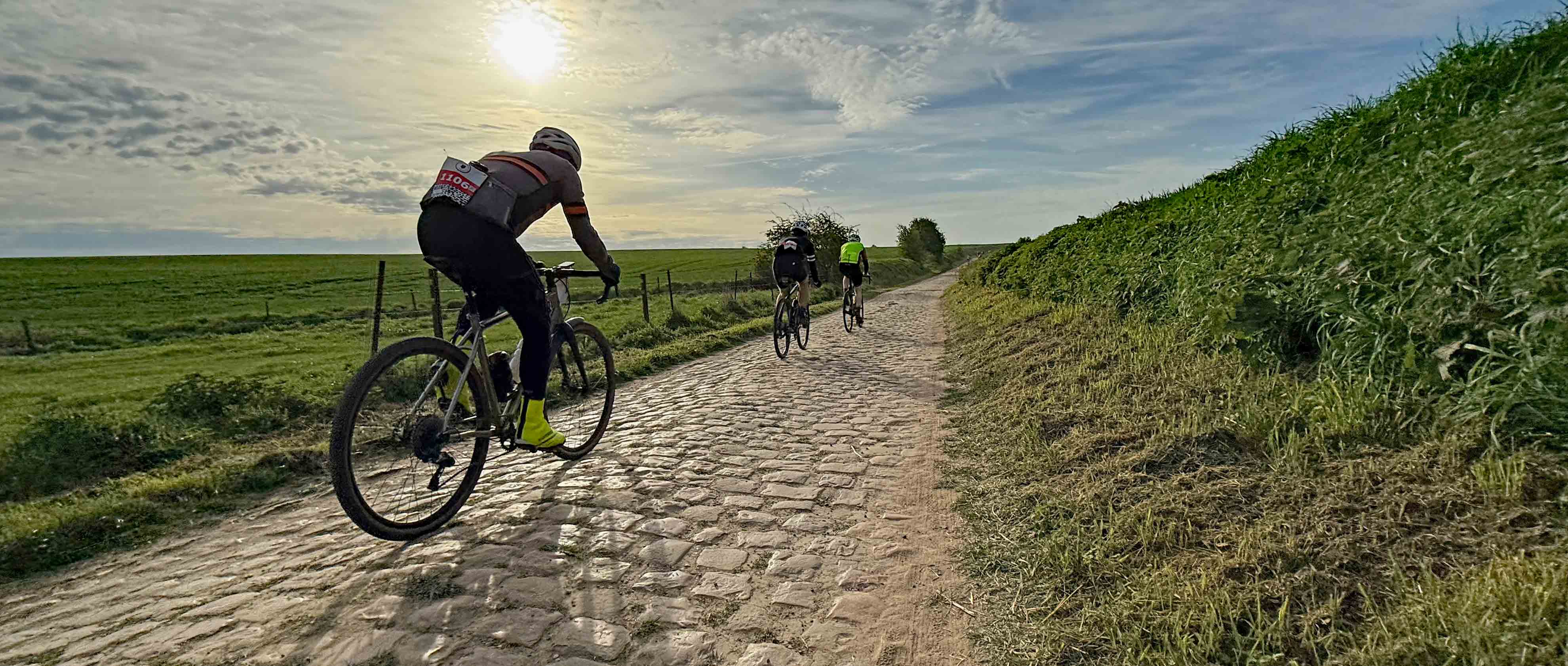
We hit our first section of pavé after a mere 11km, enough time that our muscles and brains had started to warm up slightly, but it was still a hell of a shock. Each cobbled ‘sector’ is numbered (from 30 down to 1 as you get closer to the velodrome) and given a star rating from 1 (relatively gentle) to 5 (completely insane). What separates Paris-Roubaix from any cobbled riding that we had done in the past was the length of the sectors. The first one (3*) was 2.2 km in length. Fortunately, despite the eye-wateringly doom-laden long-term weather forecast, as the event got closer, the weather gods smiled on us and conditions were set to be dry for the whole event. The initial set of cobbles were also relatively evenly spaced, which reduced the terror factor and the stress level significantly. After our shakedown ride from the previous day, we knew instinctively to head for the raised ‘crown’ in the centre of the track. This offered the smoothest passage and a lower chance of holes, deformities and irregular spacing, which could spell a visit from the puncture fairies.
Initially, we stuck to our unspoken rule of riding every bit of cobbles that we could, but then, even after a few sectors, subtly, riders ahead of us started to shift to the margins of the cobbles, where you could often find a smooth, gravel line adjacent to the stones themselves. Although this line might sound like the obvious choice, the lack of vibration was balanced out by the irregular arrival of holes of varying sizes, random bits of stone embedded in the track and other obstacles which required your full attention. It was immediately obvious by reading the body language of the riders around us, who came from which background in cycling – the gravel riders and mountain bike contingent seemed perfectly happy to ride the margins of the tracks, happy to bunny hop (or swerve around) any last-minute obstacles, whereas the dedicated road riders seemed to prefer the consistency of riding the crown of the track.
" Pushing a big gear, floating very slightly above your saddle, reducing your grip on the bars as much as you dared and trying to maintain a decent speed all helped to minimise the impact."
No matter where you rode, speed was your friend. The faster you could ride on the cobbles, the more you seemed to float and the vibrations were definitely dulled. The pounding was still pretty brutal, but pushing a big gear, floating very slightly above your saddle, reducing your grip on the bars as much as you dared and trying to maintain a decent speed all helped to minimise the impact. Fortunately for us, the early sections of the route seemed to have long sections of tailwind and this helped us maintain speeds of above 30kph on many of the cobbled sections. At the time, I felt super proud of this, but when we watched the pros tackle the same sectors 24 hours later, the front of the men’s peloton were exactly twice as fast as we managed!
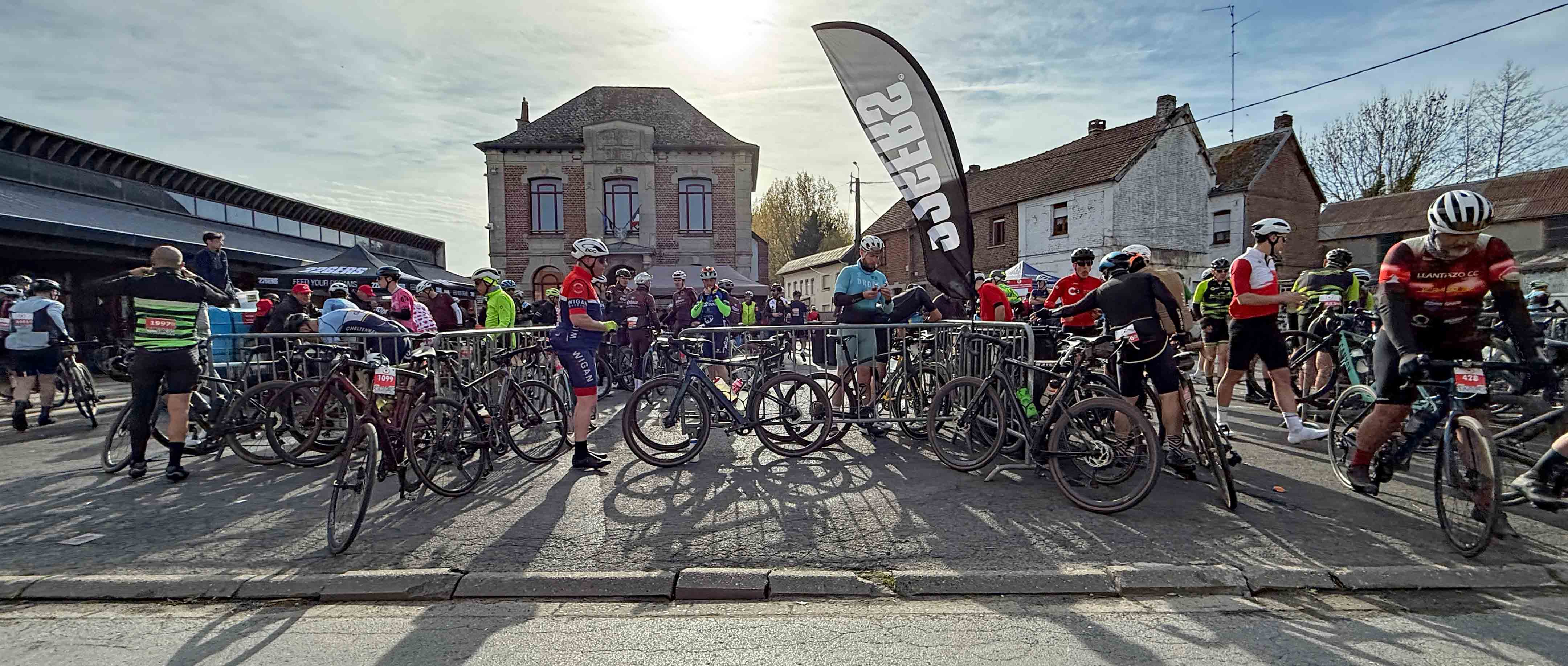
The first of the feed stations laid on by the organisers came up at 49 km. We’d been riding for just over two hours, so were ahead of our home-made schedule and were feeling good. We’d had a few minor mechanicals – I’d lost my supplementary drinks bottle and Sam’s saddlepack had decided to eject itself a couple of times – the latter easily fixed with some electrical tape, but we were generally feeling good. We topped up water levels, grabbed some of the wide selection of food on offer and headed straight out again, keen to maintain our good progress. We realised that our first BIG challenge of the ride, Sector 19, the infamous 5* rated Trouée d'Arenberg was coming up in less than 30 kilometres' time and this definitely sharpened our attention levels.
The route up to Sector 19 included a wide range of surfaces – over eight kilometres of 3* and 4* rated cobbles (including a cobbled climb, a new addition for the 2026 version of the event), plus a mixture of minor roads, cycle paths and one surprisingly dark underpass (not included in the pro-version of the route).
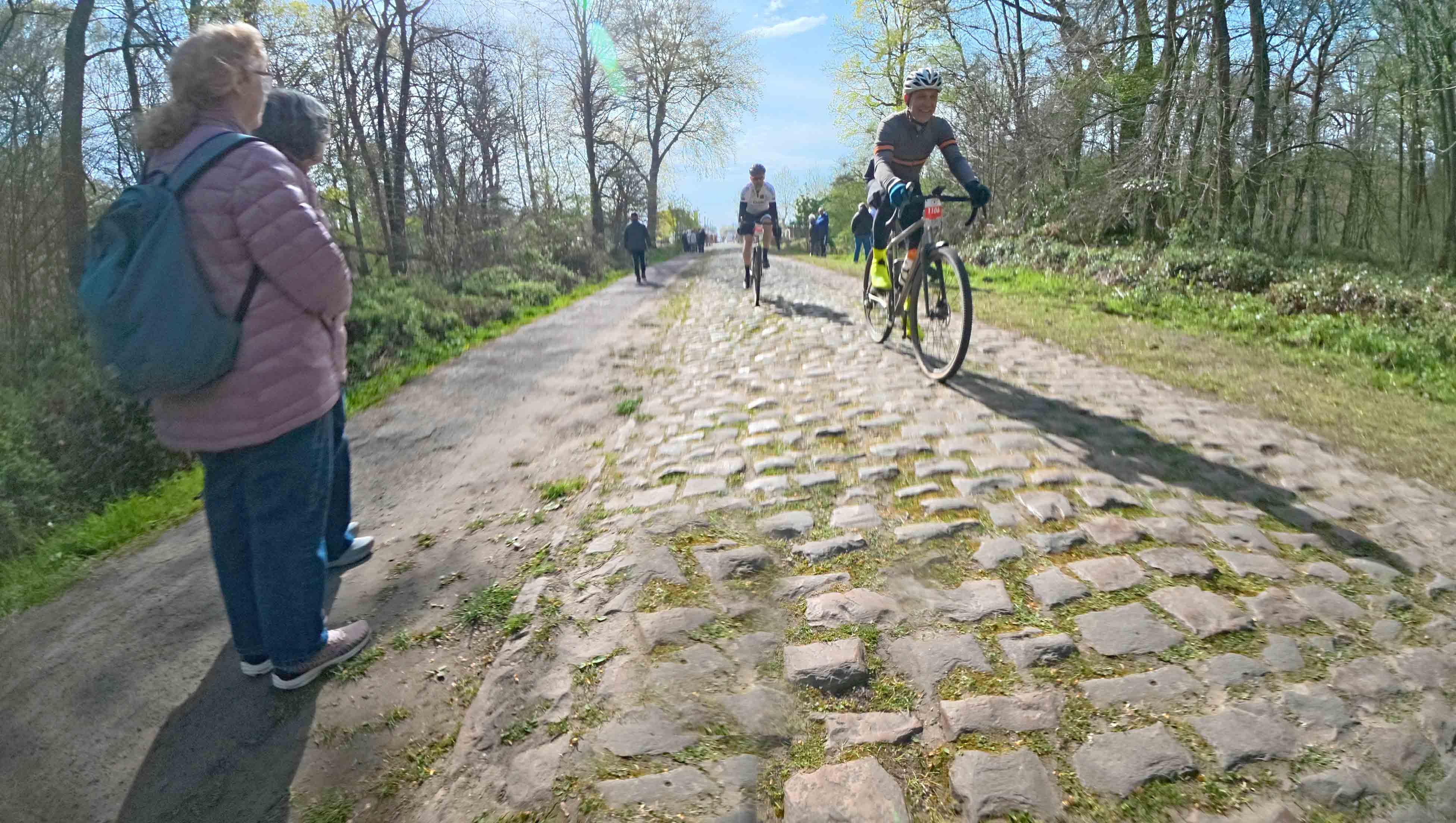
As we got nearer to Arenberg, you could sense the level of nervous excitement ratcheting up. The Trouée d'Arenberg is the first 5* rated sector of the event and is 2.3 km in length. Unlike the rest of the course, the whole of the sector is tree-lined on both sides and it’s been the site of numerous battles between the stars of pro cycling over the years. Renowned for the hideous surface, with vast chasms between the cobble stones, huge holes, margins which crumble away to nothing and (for the pros) a wall of tens of thousands of baying fans, its reputation alone was enough to generate a heart rate spike. In my weird, self-obsessed world, this was a sector with my name all over it. I’d been training hard for the past six months with the aim of not only successfully riding this sector, but actually riding it at race pace, trying in some small way to emulate my heroes.
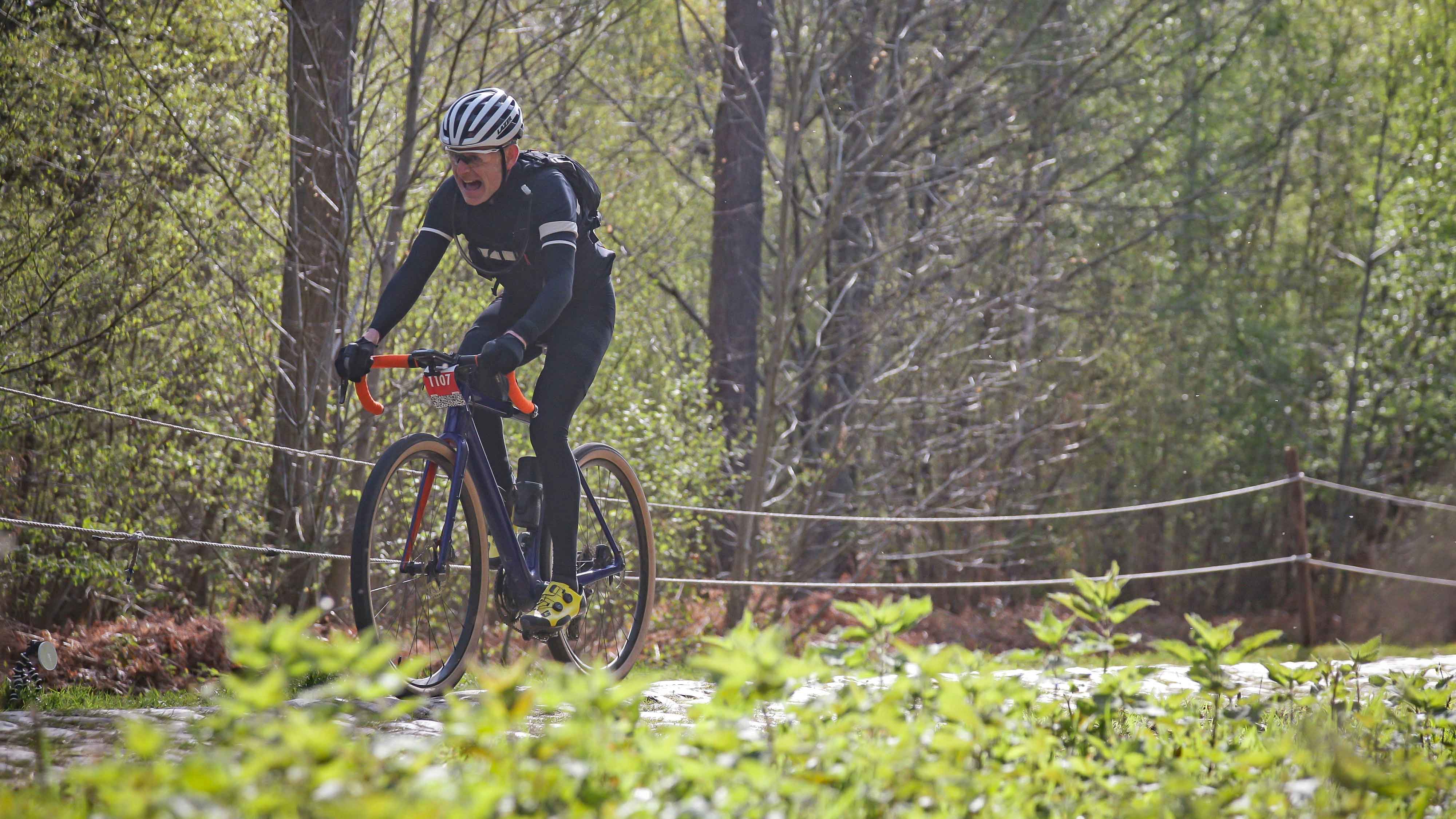
Image courtesy of Sportograf
With my 700x48 slick tyres, suspension stem, suspension seatpost, 4iiii power meter and super thick bartape, I had optimised my bike setup for this section of the parcours and I was determined to use my MTB background and my perfectly adapted bike to do it some justice. In my head, I had planned to ride the Arenberg as close to 30 kph as I could. As you can see from the image above, I gave it everything and my entire body hurt. I tried to be as smooth as I could on the bike and for the first half, I managed to slalom my way around hundreds of riders, always trying to return to the smoother central line whenever my path was clear. The Arenberg sector initially descends (which helps you build up some extra momentum), but then from the halfway point, the gradient switches and it climbs gently all the way to the finish. It’s not significant, but just as your body starts to feel absolutely pummelled by the grossly uneven surface, so the gradient starts to rob you of speed. In the end, I managed to average 26 kph and generated a pretty consistent 300 watts of power, which I was super happy with. OK, so the top pros rode it more than twice as fast and generated way more than double my power, but I still managed to get to the end feeling as though I had triumphed in the battle of man versus cobble (on this sector anyway).
" I still managed to get to the end feeling as though I had triumphed in the battle of man versus cobble (on this sector anyway). "
My riding buddies had mixed experiences. Depending on how generous Lady Luck was feeling, you could get significantly held up by slower riders, which robbed you of speed and meant you felt every single juddering vibration. Once your speed dropped, getting going again was a Sisyphean task. You could tell immediately just by looking at their faces, which of my friends had managed a minor triumph versus those who had been roundly beaten. Luckily, all of us had made it through safely and that in itself was worth celebrating.
My memories of the 90-odd kilometres which followed the Arenberg are distinctly indistinct. There were two additional 5* sectors, the penultimate portion of the last of which (the spectacularly juddery Carrefour de l'Arbre) was ridden into a headwind so strong that I nearly lost the will to live. It was here that we suffered our only mechanical mishap – the valve stem locknut ring on Ant’s front wheel had been shaken loose by all the vibrations, meaning he was slowly losing air. Fortunately, he diagnosed the problem quickly and miraculously, he found some trackside spectators equipped with a track pump, which meant he was soon back up and riding again.
" Ridden into a screaming headwind made it significantly harder than it should have been, but the addition of low temperatures and driving rain made the experience doubly unpleasant. "
The penultimate sector of cobbles, nominally given a 2* rating, proved to be one of the toughest of the entire route. Ridden into a screaming headwind made it significantly harder than it should have been, but the addition of low temperatures and driving rain made the experience doubly unpleasant. This sector is unusual in that the margins of the cobblestones are paved in velvety tarmac. This meant we had a choice of leg-salving smoothness or soul-salving pavé. After the frustration of his mechanical, Ant found some willpower buried deep inside and chose the significantly harder cobbled line for the whole of this sector. My legs were telling me exactly what they thought of my day on the bike and I chose the easy option on the tarmac instead.
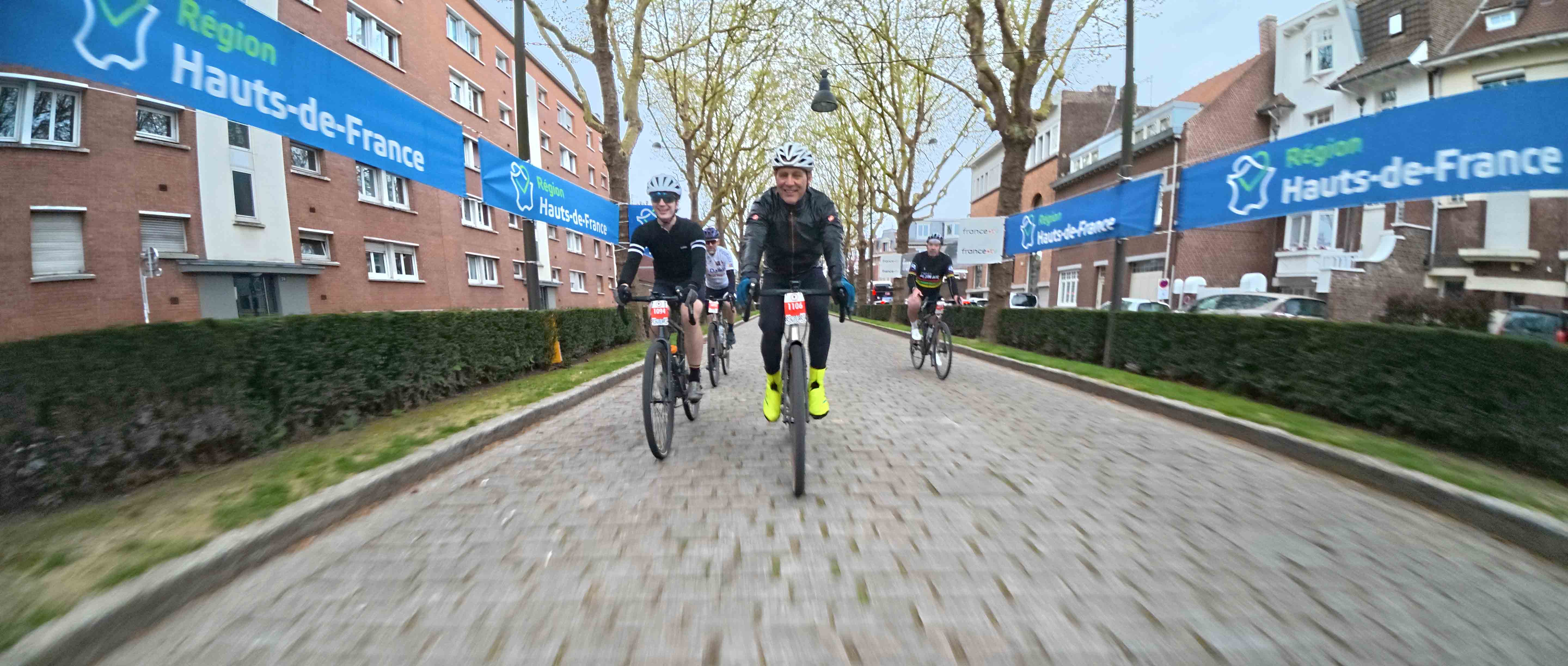
With less than 2km to go to the finish line, the final sector of pavé was soon upon us. Unlike the other sectors, this one is 100% urban and is essentially ceremonial. The cobblestones are laid perfectly, the gaps consistent and the surface is so smooth that it barely counts as cobbles at all. We rode it with big grins on our faces, knowing that we had nearly achieved our goal.
" The Paris-Roubaix Challenge had been the sole focus of my cycling life for the past six months and as we rolled over the finish line together, I had mixed emotions. "
The ceremonial half-lap of the velodrome was both inspirational and somewhat loaded with pathos. The Paris-Roubaix Challenge had been the sole focus of my cycling life for the past six months and as we rolled over the finish line together, I had mixed emotions. Elation at having successfully finished the event, but also a slightly odd sense of emptiness, knowing that having achieved my goal, I didn’t actually have anything else ‘big’ to look forward to.
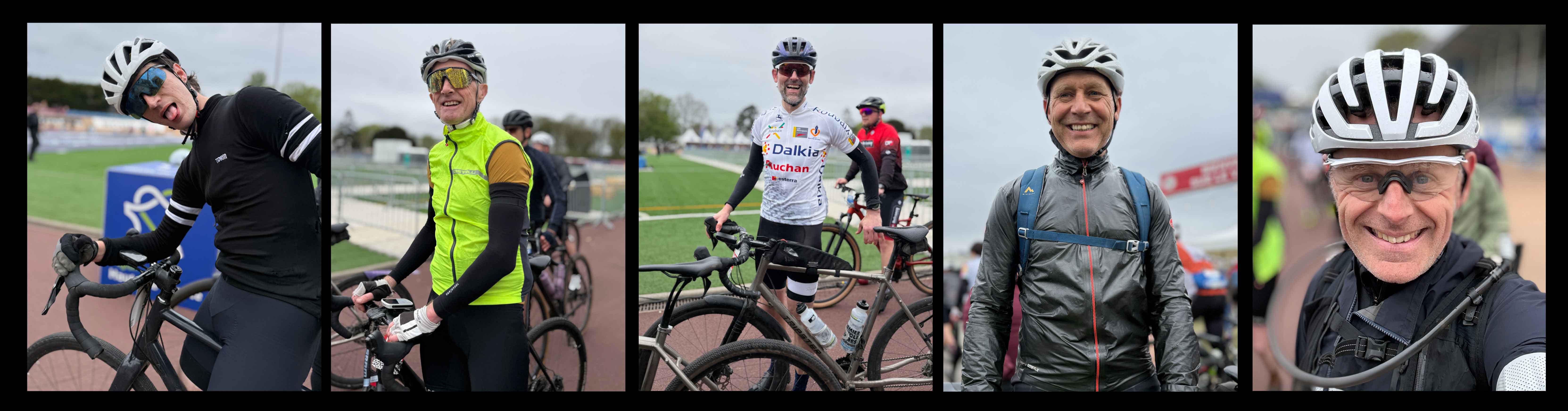
If you ever see finish line portraits of the pros after finishing the Paris-Roubaix, they look like old people. Dust (or mud) fills their every pore and apart from the winners, they seem drained of life force, battered by the brutality of the Hell of the North. Weirdly and frankly miraculously, in comparison, we all felt ok. Sure, we had tired legs, but considering the magnitude of our rides, we actually felt pretty good. We’ll gloss quickly over the fact that the pros ride significantly further, immensely faster and without the luxury of 48mm wide tyres, feed stops or a fantastic group of friends to help motivate/inspire/cajole them into getting to the finish and just be happy with our achievement.
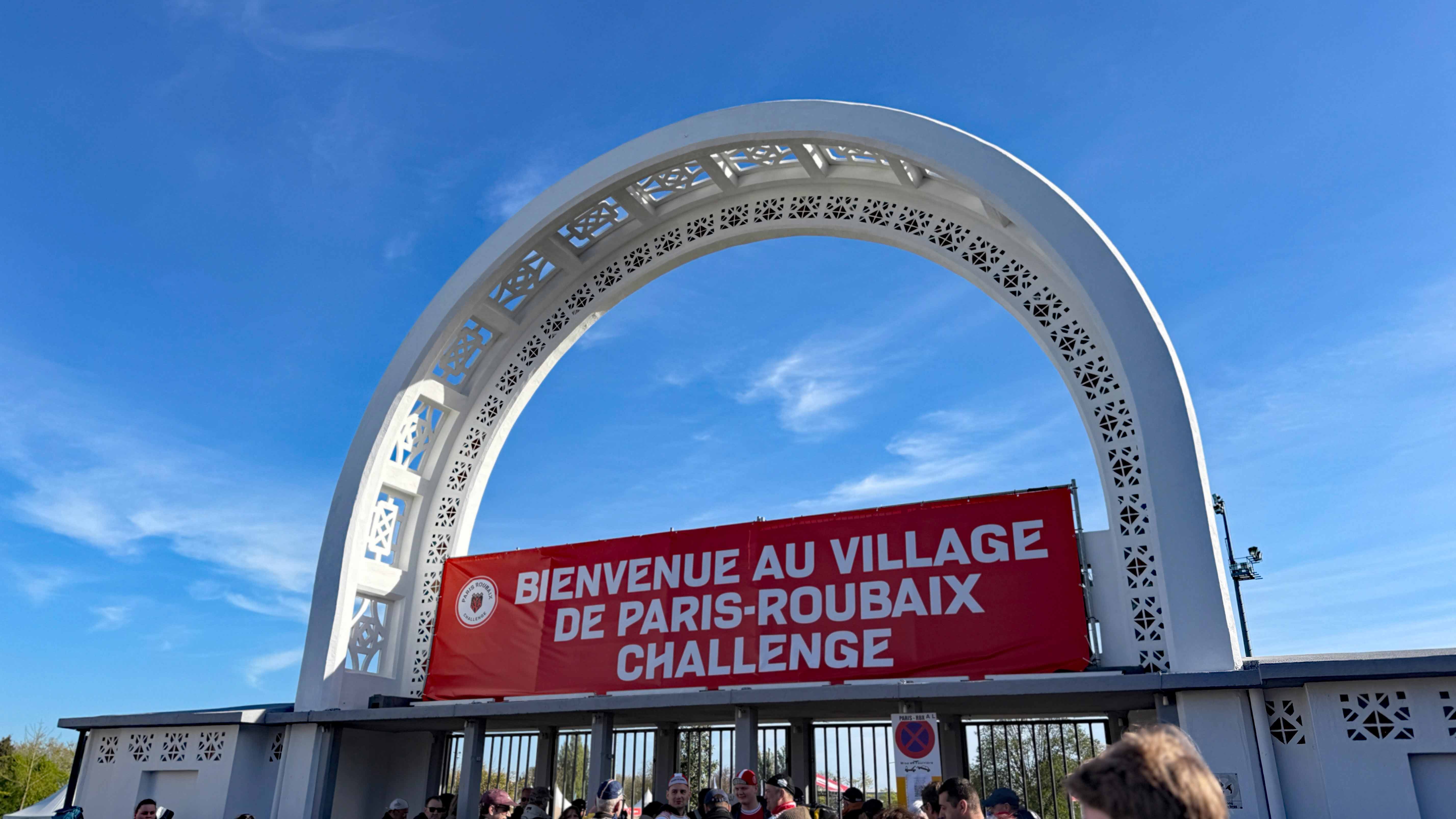
For anyone even vaguely interested in riding the Paris-Roubaix Challenge, I would wholeheartedly recommend it. Getting to ride the event yourself and then watch the world’s best racers tackle the same course the next day is an experience that everyone should aspire to if they possibly can. I loved every minute of our trip to northern France and can confidently say that we found heaven in the Hell of the North.
If you’re inspired to take on the world’s most challenging cobbled event, entries for 2027 are already open. You can find out all the details here.