Spending two months meandering from Norway down to Spain’s west coast in a 1980s Mercedes van sounds more like the storyline of a Hollywood rom-com than something from real life. Yet that’s exactly how Henna Palosaari and her partner Adam Gairns decided to wrap up their summer this year. With mountain views, sunset surf sessions, sunrise yoga and the discovery of incredible gravel trails, it all sounds like a dream. But did van life actually meet their expectations? Keep reading to find out.
This autumn, my partner Adam and I felt it wasn’t the right time for a long bikepacking trip. You need to be in the right headspace to bike for weeks or months on end. We still wanted to ride, but something a bit more relaxing after a busy year. So instead, we loaded our old 1982 Mercedes-Benz van with two gravel bikes and six surfboards and started driving from Norway toward the north-west tip of Spain: Galicia, the unspoken gem of the country.
Slow travel
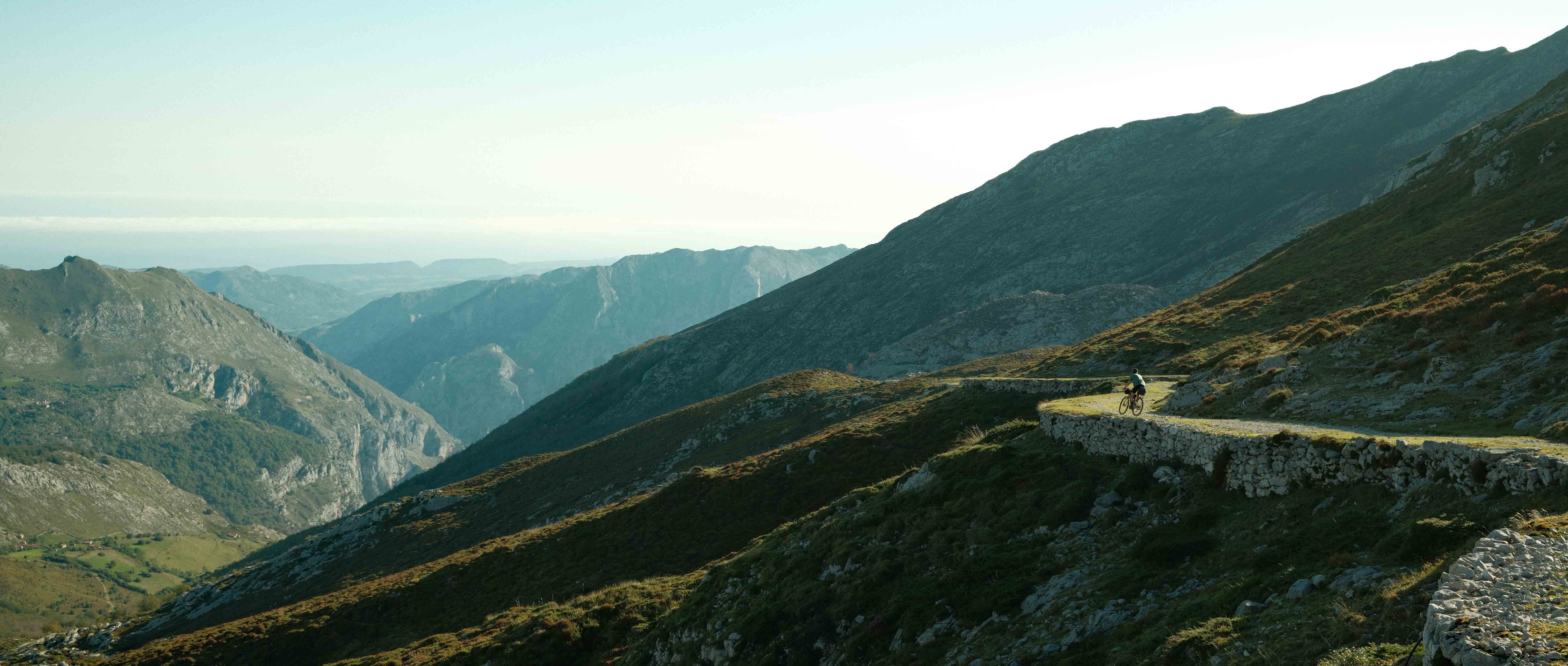
As we slowly made our way south - cruising at our max speed of 85 km/h on the autobahn while other cars flew past at 130 km/h - it felt like time had stopped. You’d check Google Maps and it would say 12 hours 45 minutes left. Ten minutes later, you’d check again and it would say 12 hours 44 minutes left. We looked at each other without saying a word, both thinking the same thing: “Maybe bikepacking would have been a more relaxing way to spend our vacation after all, instead of squeezing ourselves between endless lines of trucks for days on end.”
With bikes, we always talk about slow travel and how nice it is to take things at a gentle pace. And it is, but I have to admit, I much prefer travelling slow slow on small winding country roads and scenic mountain passes than crawling down the autobahn. To break up the drive, we decided to make our first proper stop in Hossegor, in south-west France. There we finally unloaded our bikes and surfboards and did what we came to do. Our friend Julien showed us the amazing gravel-road network around Hossegor and took us out for a fun spin. It worked its magic on our bodies and shook off the driving fog. The rest was rinsed off in the Atlantic Ocean the next day followed by cooking dinner from the fresh vegetables and enjoying the warm night on our camp chairs. Maybe this plan was gonna be good after all.
Vacation Mode
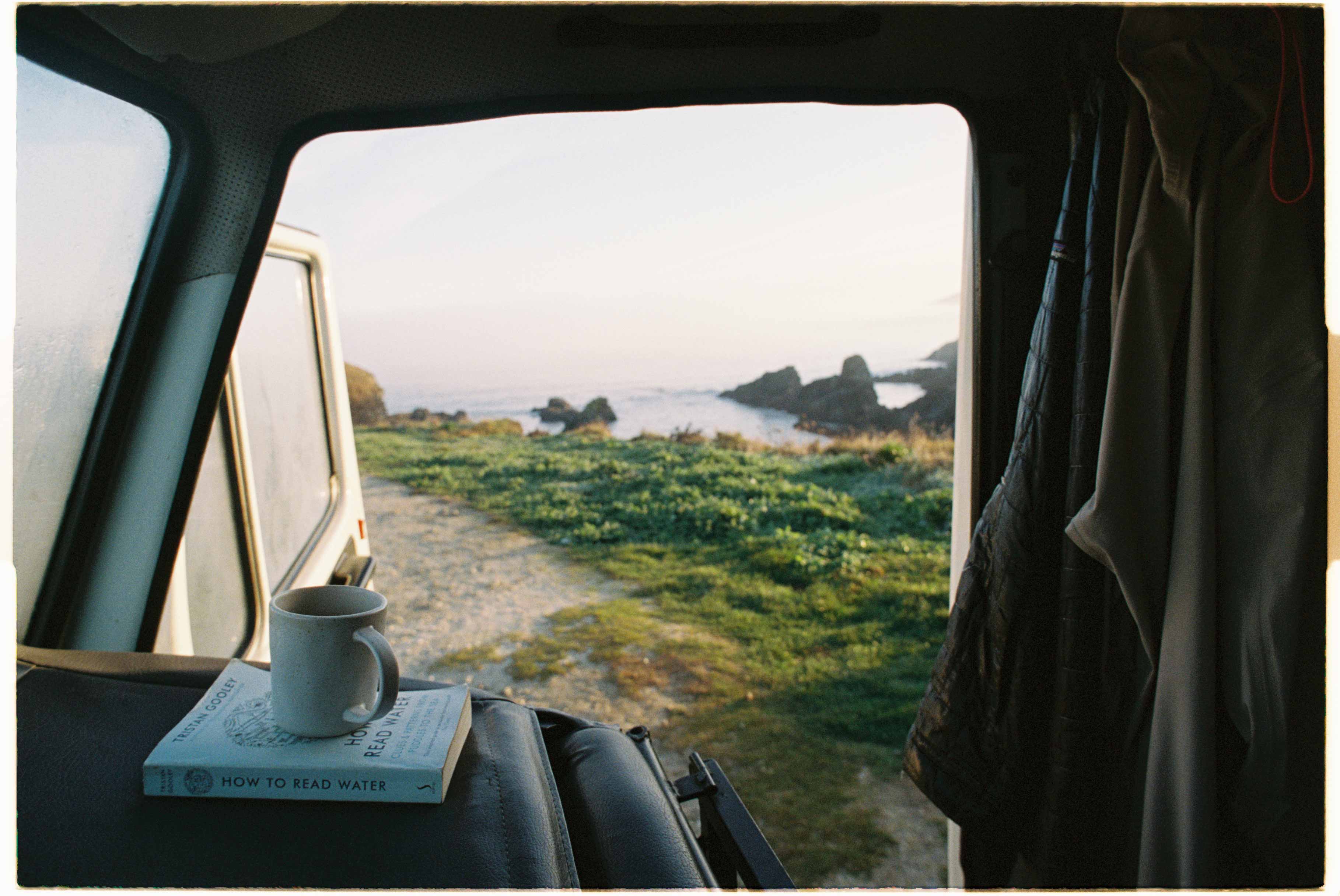
After four days, we had finally recovered from the shock of the drive and decided to start moving toward our so-called destination. Slowly, we were settling into the rhythm of the trip - learning how to truly be on vacation and do less. Our days began with coffee and an hour of reading, followed by yoga and breakfast. Then came the day’s main activity: either a bike ride to explore the area or a surf session if the swell was good.
The steep hillsides of the Basque Country, with beaches tucked between them, created a stunning setting for it all. They were far better experienced from a bike saddle than from behind the wheel, as our legs felt much more capable of tackling the climbs than our old van’s small engine.
As we moved along the coast, the mountains of Asturias suddenly appeared on the horizon. We had no idea northern Spain had such peaks. It turns out this is the Picos de Europa, “the first peaks of Europe,” as sailors once called them. Curiosity struck - we thought maybe we could attempt a small bikepacking trip here. Research began, routes were drawn and we found a manageable loop around the eastern range of the Picos.
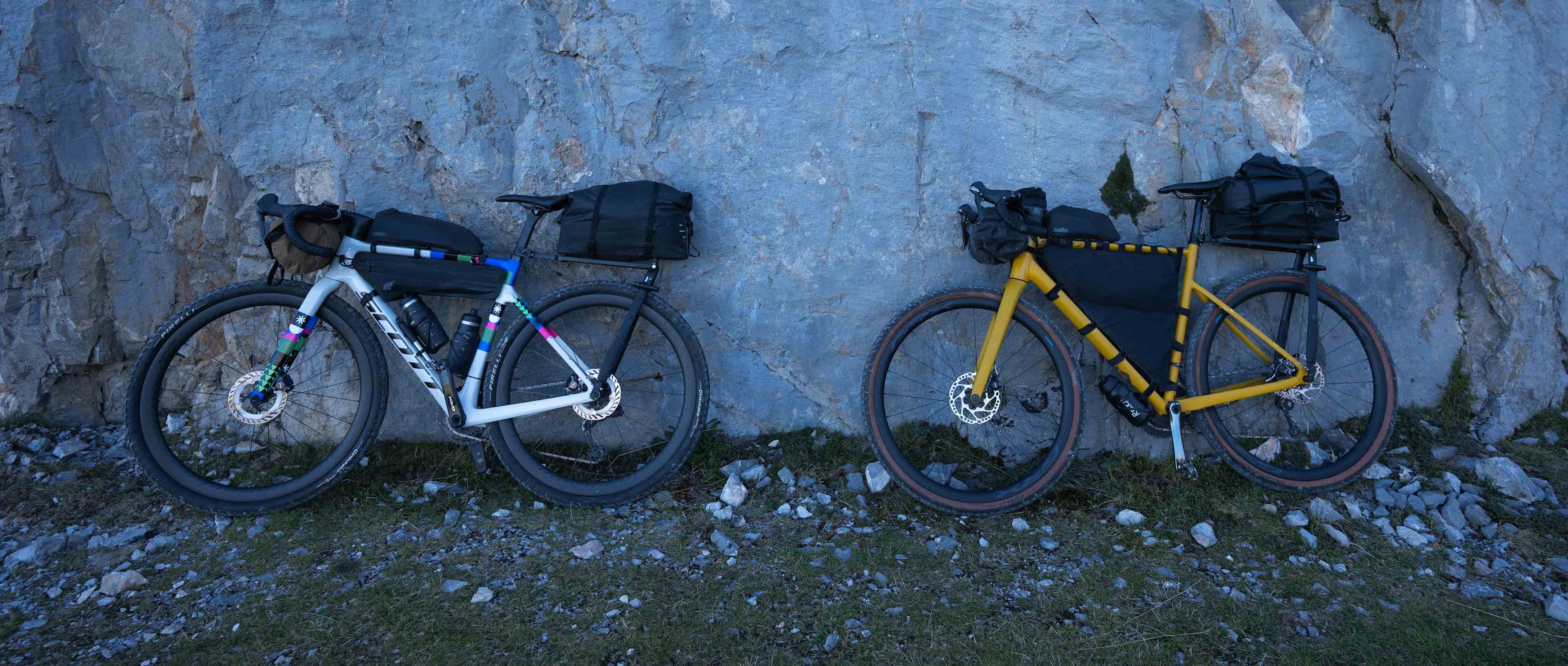
The weather forecast promised perfect conditions for the next six days, with snow expected in the 2,400-meter high peaks afterward. Without hesitation, we decided to drive there the next day and start biking.
First Peaks of Europe and Mining Trails
Our loop was relatively short but packed with climbing: 120 km with 4,800 meters of elevation gain. As we ascended toward Sotres, one of the stage finishes of La Vuelta, we realized just how steep Picos can be. When the asphalt gave way to gravel, we had to hop off and push the last few kilometres up to the refugio for the night. Since all of the Picos de Europa is a national park, we wanted to respect the rules and avoid camping.
Settling into the refugio, our host started sharing stories about the area’s history. The Casetón de Ándara had once been a barrack for miners - a sturdy stone shelter for those working long, gruelling shifts high in the mountains. The road we had just pushed our bikes up was originally a mining track used to transport ore via ox-carts (carros de bueyes).
Later, we hiked around the refuge and could see the remnants of that era: piles of discarded rock, mine entrances, and gravel tracks winding up the slopes. There had once been a high-altitude lake, Lago de Ándara, reportedly around 15 meters deep, but in 1911 it was partially drained - likely due to a poorly calculated explosion or mining excavation that cracked the underground and let water escape. Over time, the mining paths, galleries and other infrastructure became part of the heritage of the Macizo de Ándara, giving hikers and bikers a way to explore this stunning landscape.
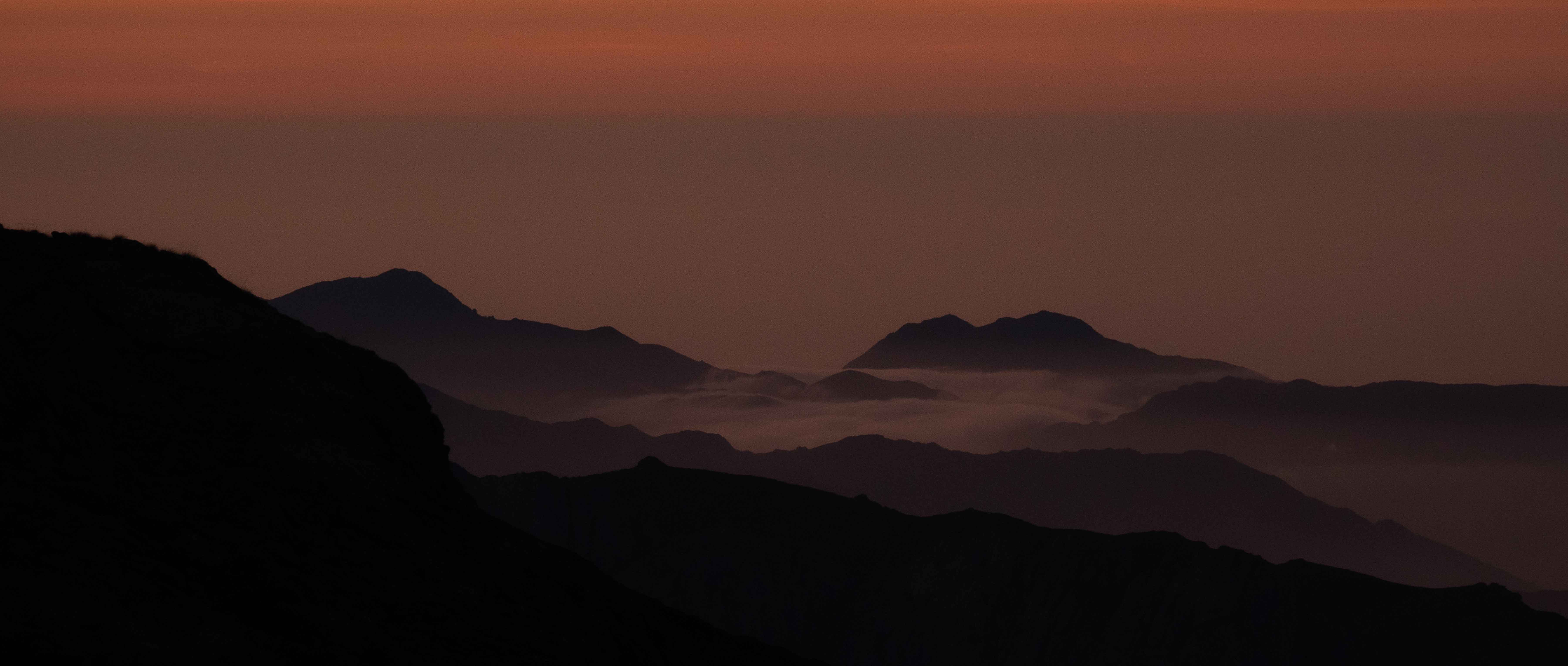
As the sun slid behind the peaks, we sipped hot noodle soup, taking in the scenery. The history embedded in the Casetón de Ándara made the mountains feel alive in a way no postcard ever could. This is why bikepacking is so rewarding - if we had travelled by van alone, we would never have discovered this place.
Our journey continued the next day through endless peaks towards a town called Mogrovejo. Up at the refugio we had learned from our host that the old mines were now used for aging cheese. As cheese lovers we quickly decided that in the next town we needed to try the local cheeses.
Full stop
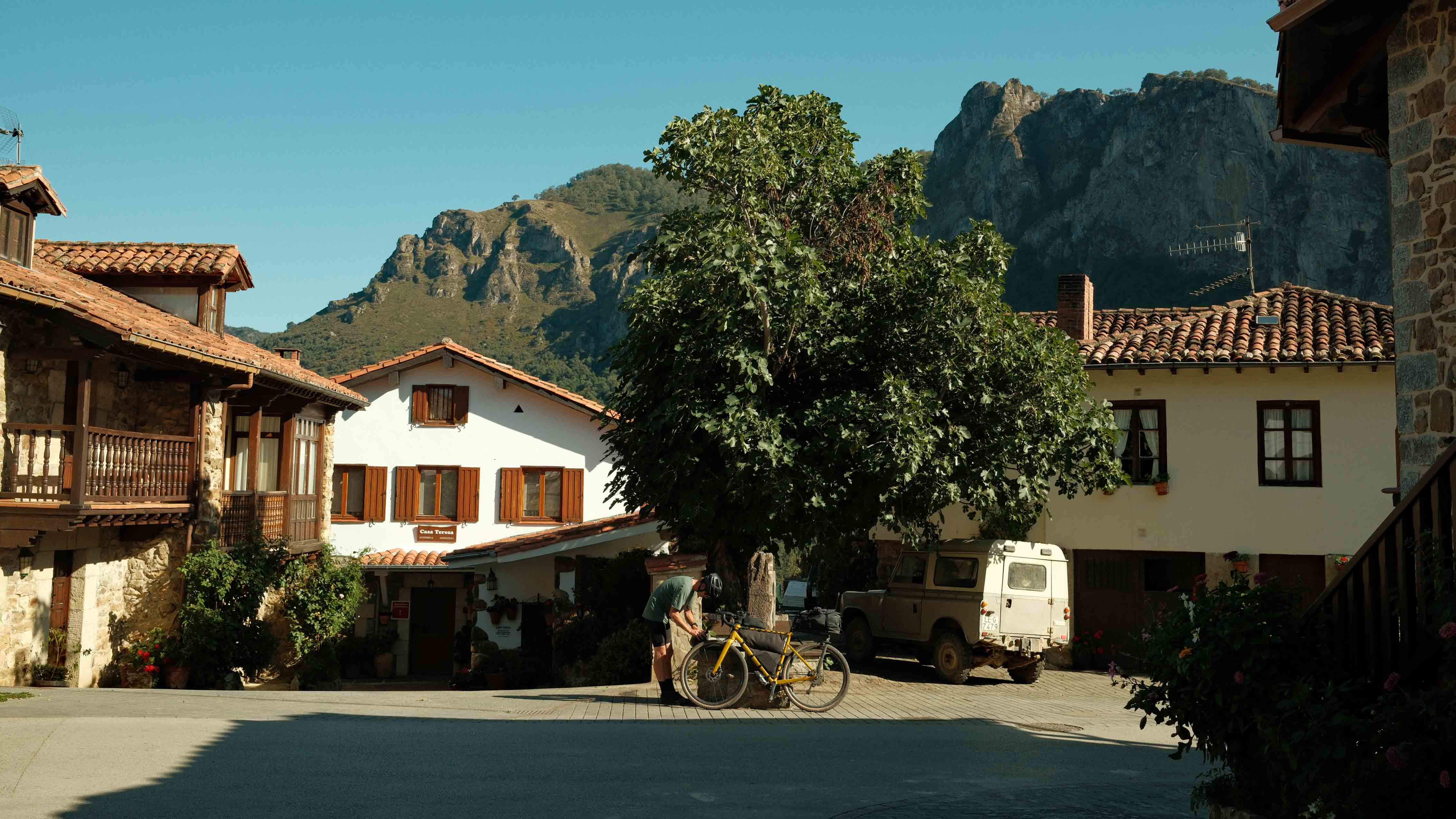
“Una tabla de quesos, unas croquetas y dos Coca-Colas, por favor,” we ordered as we finally sat down, still sweating from the midday sun after tackling a long but breathtaking gravel section carved between the steep mountains. We savoured every bite of our meal, then hopped back on the bikes to continue toward the town where we planned to stock up on food before climbing back into the mountains.
“I’m not feeling that good… my stomach feels a bit weird,” Adam said as we rolled up to the grocery store. “Maybe lie down on a bench for a bit and let’s see what we do,” I replied. But only a few minutes later, my own stomach began to turn. We decided to call it a day and booked a hotel in town.
I took a shower first; Adam went in after me. As soon as he stepped out, I had to run back in to throw up. Not long after, he followed. Shit. We had gotten food poisoning. The night continued like that. The next day we dragged our empty bodies into another hotel and spent the second day shivering with high fevers.
“That’s it then,” we agreed. There was no way we had enough energy left to stick to the original route, so we plotted the shortest way back to the van. Fifty kilometres and 300 meters of climbing in that condition felt like a mission - but we managed.
It was time to return to relaxation mode, rebuild our strength and accept that travel, like life, rarely follows the script you draw on komoot.
Regaining
Maybe it was the universe’s way of reminding us why we came on this trip in the first place: to truly slow down. Maybe we just needed to stick to that intention. The next morning, still a bit fragile but craving something gentler, we decided to finally cross from Asturias into Galicia - our original destination - and spend the rest of the trip exploring its hidden beaches and coastal gravel roads from the comfort of our van.
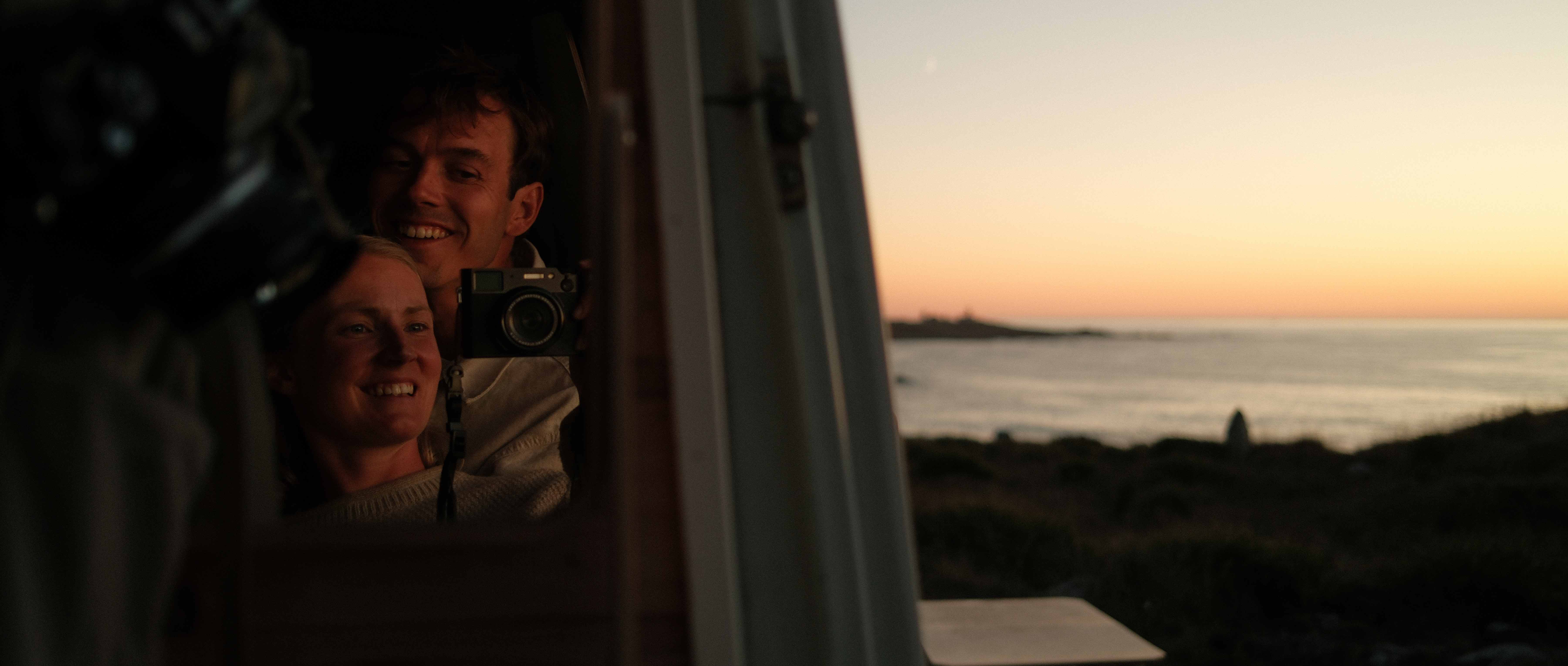
It turned out to be exactly what we needed. We spent the following weeks surfing fun beach breaks, reading books, eating biscuits and heading out on day rides that took us through tiny fishing villages, eucalyptus forests and stretches of the iconic Camino de Santiago. After days of spotting the yellow arrows and passing hundreds of hikers, it felt special to finally roll along pieces of the trail ourselves. We even rode into one of its most famous endpoints: the cathedral in Santiago de Compostela, where many pilgrims finish their journey - though some continue even farther west to Finisterre, the “end of the earth,” to let the pilgrimage meet the sea. We had seen plenty of pilgrims along the way, but nothing prepared us for the scene in the main square. It was overflowing with hikers of every age and nationality. It felt like arriving at the end of a shared journey, even though we had only experienced a small fragment of it. And maybe, in our own way, this trip was our version of the Camino de Santiago - a path we’ll remember forever.
Closing
As we packed up the van for the last time and prepared to head home, the mountains, gravel tracks, and hidden beaches of northern Spain lingered in our minds. We had chased slow roads, surfed Atlantic swells, climbed steep peaks and wandered along centuries-old mining trails. We had discovered that adventure isn’t always about covering the most distance or ticking off the hardest routes - it’s about presence, curiosity and letting the journey unfold at its own pace. Galicia, Asturias and the Basque coast had given us more than landscapes; they gave us stories, moments of awe and memories that will stay with us forever. Maybe that’s what every journey should be about: slowing down enough to truly feel it all.
Images courtesy of Henna Palosaari and Adam Gairns