“Riding The Capitals showed me there might be a richer way to experience ultra-distance cycling.” That’s how Caroline Livesey opened the story she sent us after successfully completing The Capitals. A record-breaking ultra-distance cyclist with countless races under her belt, Caroline is used to tackling events with a determined, head-down approach. This time, however, she decided to try something different. Teaming up with her husband, Mark, she rode the event as a pair, with the goal of enjoying the journey rather than chasing the fastest finish time. Read on to find out how their experience unfolded.
“I hated it enough to know I didn’t want to have that experience again.”
Badlands. 750kms. 60hours on the move. Less than three hours of sleep in total. Three years ago I rode my first non-stop ultra-distance bikepacking race and I hated it. Or at least I hated a big part of it. Afterwards, however, I could reflect in a positive way about what it taught me and it was the springboard for lots of amazing gravelly things that followed. But I hated it enough to know I didn’t want to have that experience again.
At the time, fresh to the ultra-distance scene, I dismissed the idea of staying in hotels during these events as “cheating”. I wanted to experience the raw and minimalist nature of riding with everything you need and only having to stop for food and water. I got that experience and while there is something purist about it, it also meant that many of the 60 hours I spent on my bike were not remotely enjoyable. Riding became a chore, so much so that I couldn’t even look up and appreciate where I was. I became sleep-deprived and blinkered, looking only at my Garmin ticking down the kilometres until the finish so the pain would stop. I realised I wasn't simply sacrificing sleep. I was sacrificing the very thing that had brought me there in the first place - the joy of riding a bike.
“Riding became a chore, so much so that I couldn’t even look up and appreciate where I was.”
It made me wonder what we are actually searching for when we ride these massive races non-stop. Is it fulfilment? Achievement? Validation? Or simply because it has come to be what is expected in ultra races?
My husband Mark and I have discussed at length the pros and cons of ultra-distance bikepacking races and where we might find enjoyment in them. Why do we automatically assume the fastest possible way is also the best way to experience something? That’s a cultural trend that is a reflection of modern life. Slowing down seems to signal laziness, or wasted time. Somewhere along the way we've quietly accepted that if an ultra can be done in two days, then riding it in five days somehow counts for less. I am no longer convinced that's true.
Pondering this one day, The Capitals popped into my feed on IG and as I flicked through the information and read about the philosophy of the organisers, Pedalma, an idea formed. What if we were to do the race as “not a race” and try to find a pace and way to enjoy it that was our own style? Pedalma set up The Capitals so it caters to both those who want to race it and those who want to take the full allowed time of 5 days and 14 hours. We wondered whether we could approach The Capitals differently. Ride hard, but stop each evening. Stay in the villages and carry less. See more with no night riding. Sleep properly. Wake excited to ride again.
“Somewhere along the way [riding non-stop] became the accepted definition of an ultra.”
None of this is meant as criticism of those who choose to ride through the night. Some people genuinely love testing themselves against the clock and seeing just how far they can push themselves. I understand that because I do too. But I don't think most people ride nonstop because they genuinely enjoy being sleep-deprived. I think many of us do it because, somewhere along the way, it became the accepted definition of an ultra. Sleep as little as possible. Finish as fast as you can. We rarely stop to ask whether that's actually the experience we want from every single race.
Asking that question is what led Mark and I to be on the start line of The Capitals (riding as a pair) on a sweltering July morning in Barcelona, with not a thought in our heads about racing it. The race is built with a strong cultural angle, taking riders to the four Catalan Capitals: Barcelona (start and finish), Tarragona, Lleida and Girona and we were there to take it all in.
“We wanted to finish each day tired, but not broken.”
Now let’s be clear, there was never going to be anything easy about riding 800kms with 10,000m elevation on majority gravel in five days in Spain…in July. Our plan was simple: start to ride early each day before the major heat arrived, stay in small hotels each night and leave enough time for coffee, conversations and photographs. We wanted to finish each day tired, but not broken.
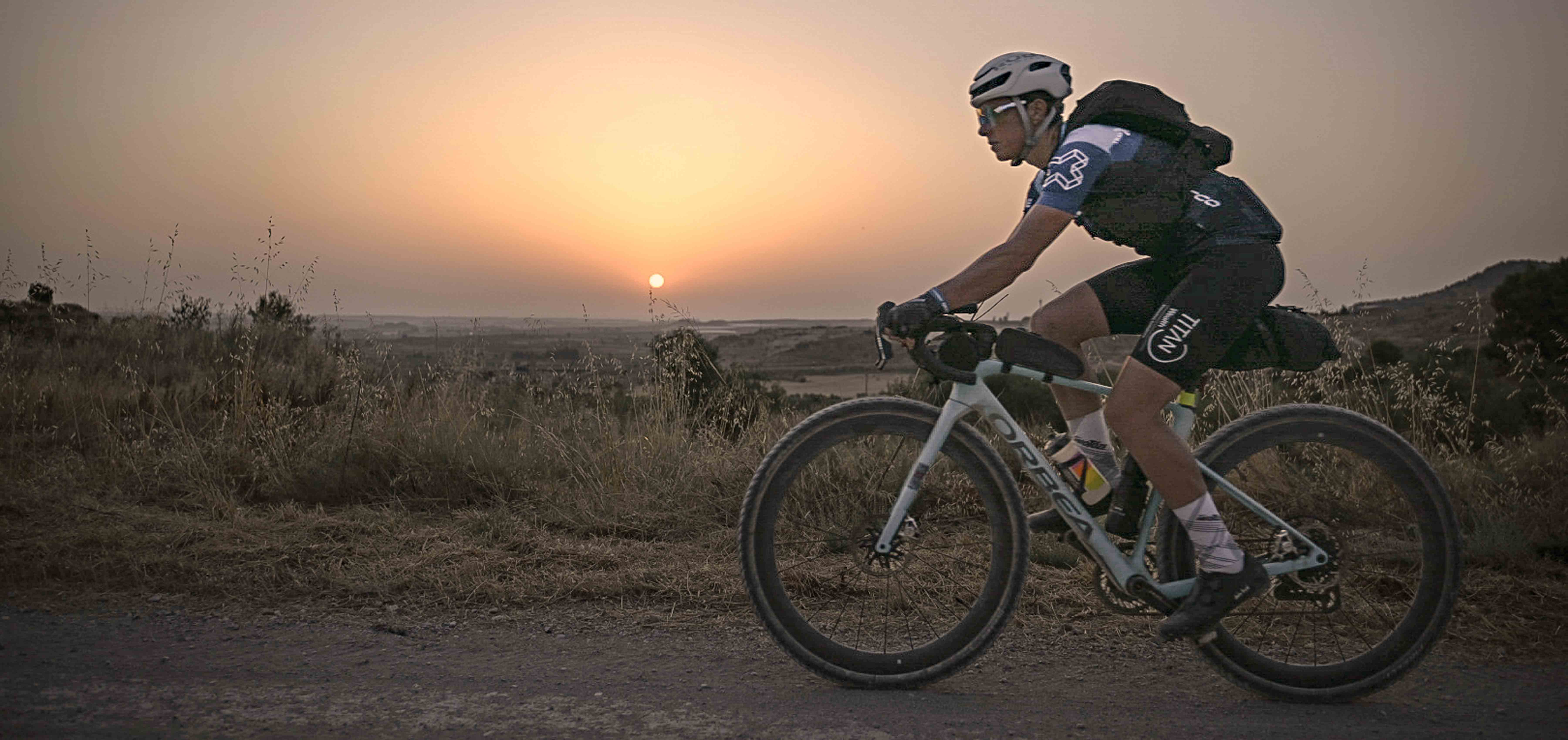
Other than Day One (race start was 06.00) we woke each day at 03.45 and started riding a little before 04.30. This meant that we could make the most of the cooler temperatures, riding for six hours or so before the mercury really started to soar. It also meant that we saw sunrise every day and had very minimal darkness to ride through (roughly 75 minutes each morning). I love a sunrise and to see that each morning in different landscapes was a treat. From the agricultural flatlands south of Lleida to the mountains of the Pyrenees, each day had such a different feeling. It was one of my favourite things about this race and it created some unforgettable moments.
“The sun was still low, the air still cool and every pause became an excuse to look around rather than simply catch our breath”
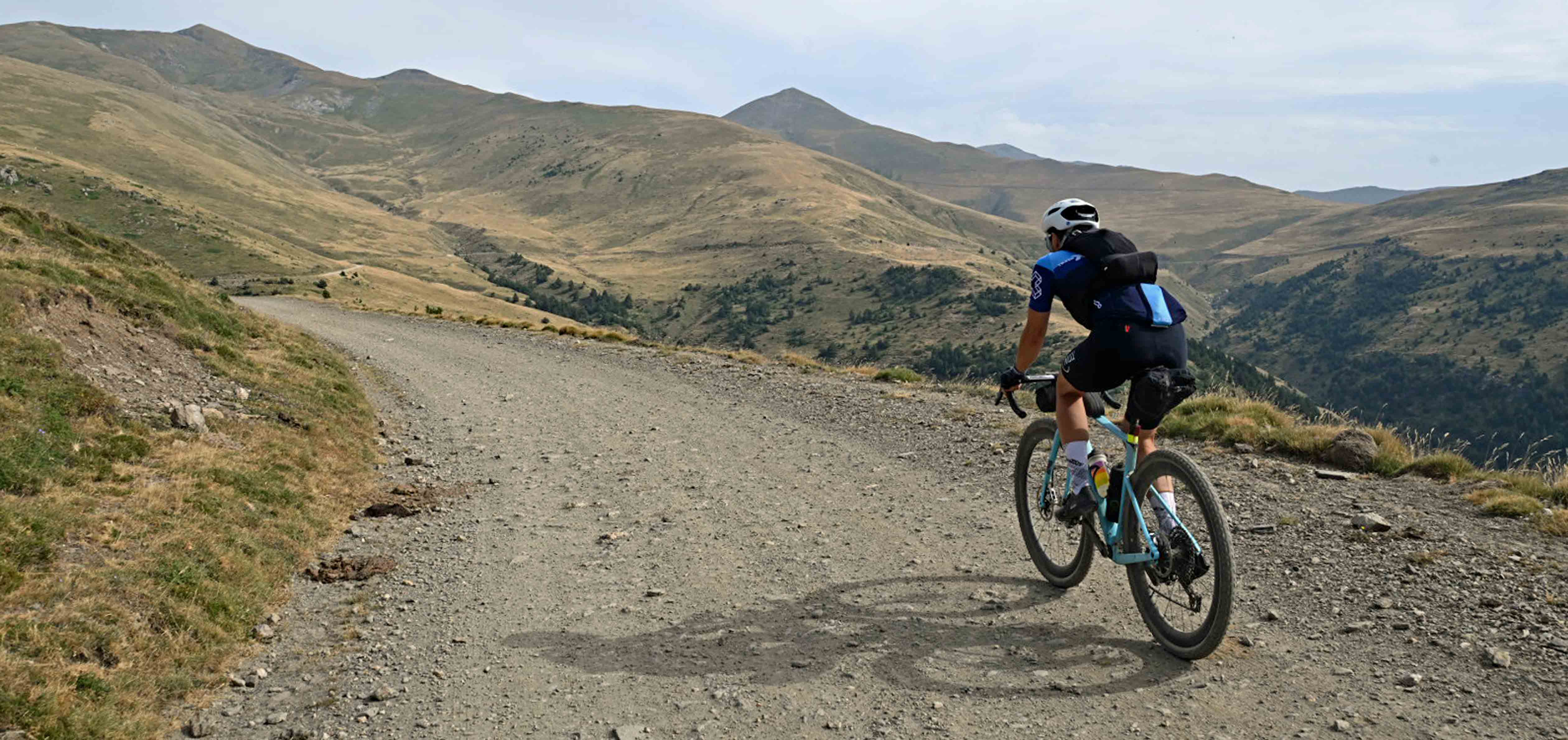
On Day Three we climbed out of Coll de Nargo in darkness, watching the mountains slowly ignite as dawn reached the rocky peaks above us. By the time we reached the hike-a-bike section on Les Bassotes, the sun was still low, the air still cool and every pause became an excuse to look around rather than simply catch our breath. The reward was one of the finest gravel descents I have ever ridden. An epically long, shady, forest-lined gravel path which flowed into Bagà and an equally well-earned café stop.
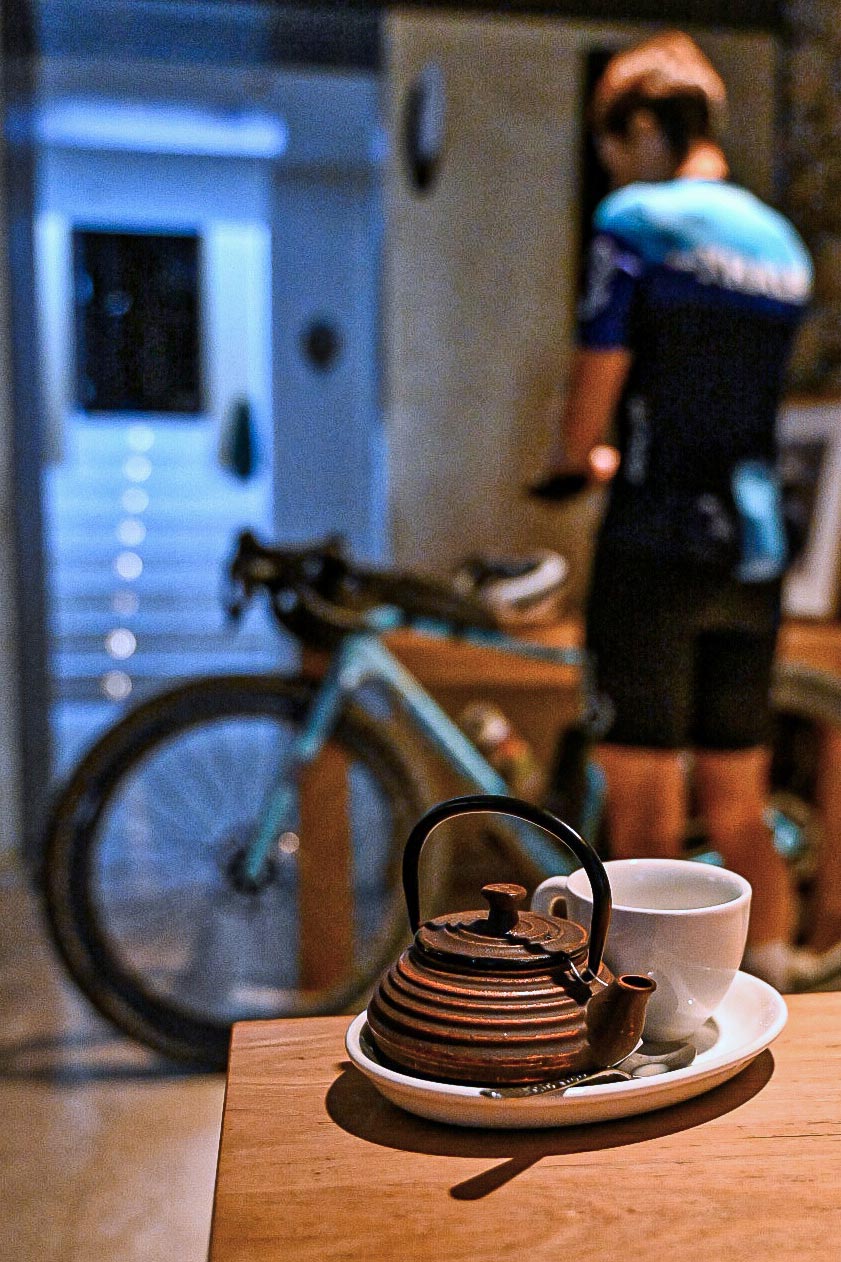
Getting up early also meant we would ride a few hours each day before any cafes were open. But those early coffee stops were a real treat. On Day Four we had witnessed sunrise high up at 2000m altitude, before descending to arrive in Ribes de Freser before the church clock had struck 08.00. Having already tackled a tough 45km, which included 700m of ascent and some rocky descending (I think that was the day Mark had a Snickers bar at 05.00), we were not going to continue without stopping for a brew. We stood peering hopefully through the window of a closed café when the owner caught sight of us and waved us inside anyway. She was so kind and it was without doubt the best cup of tea I had on the whole route. As is often the case with bikepacking, the interactions you have with the local communities and other riders are some of the things you remember the most. Slowing down and taking time to talk to people, stay in villages, and stop for food allowed us to do much more of that.
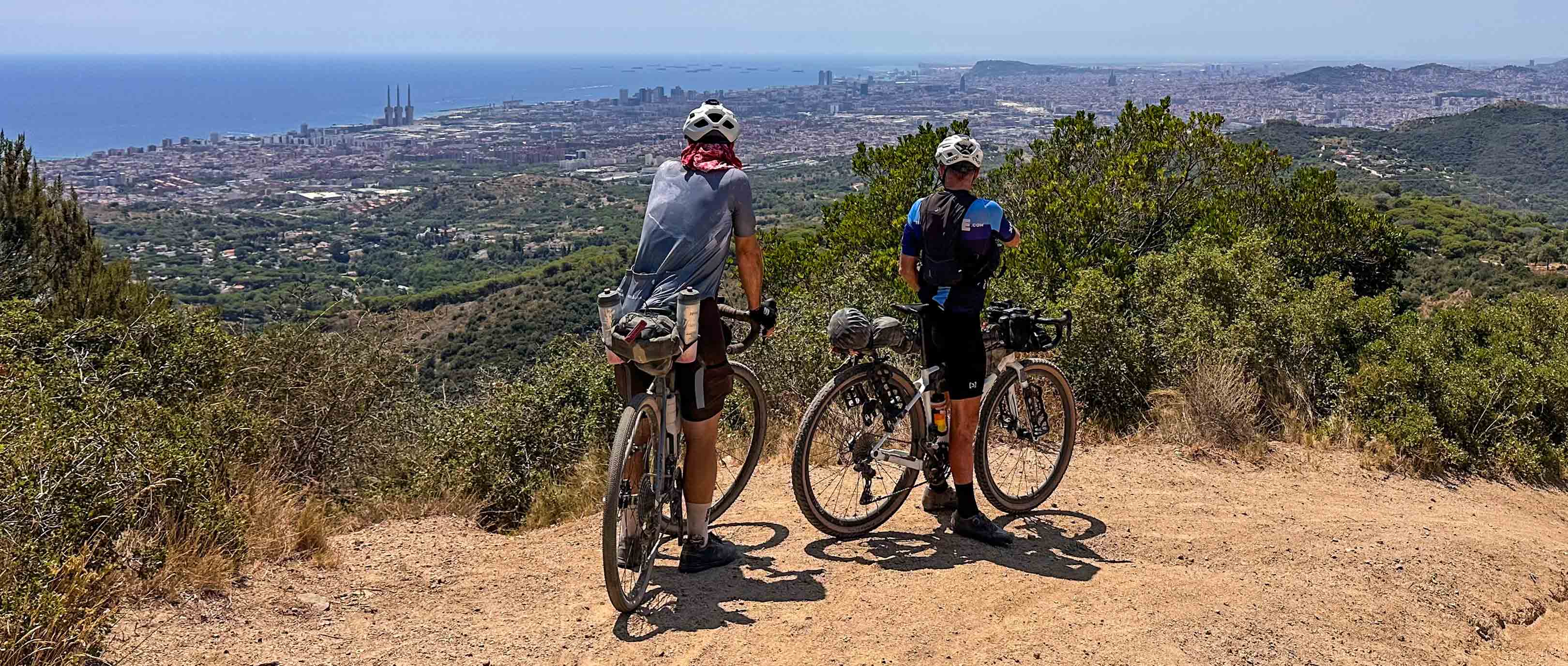
“Those moments made me realise how much I would have missed had I been riding purely in survival mode.”
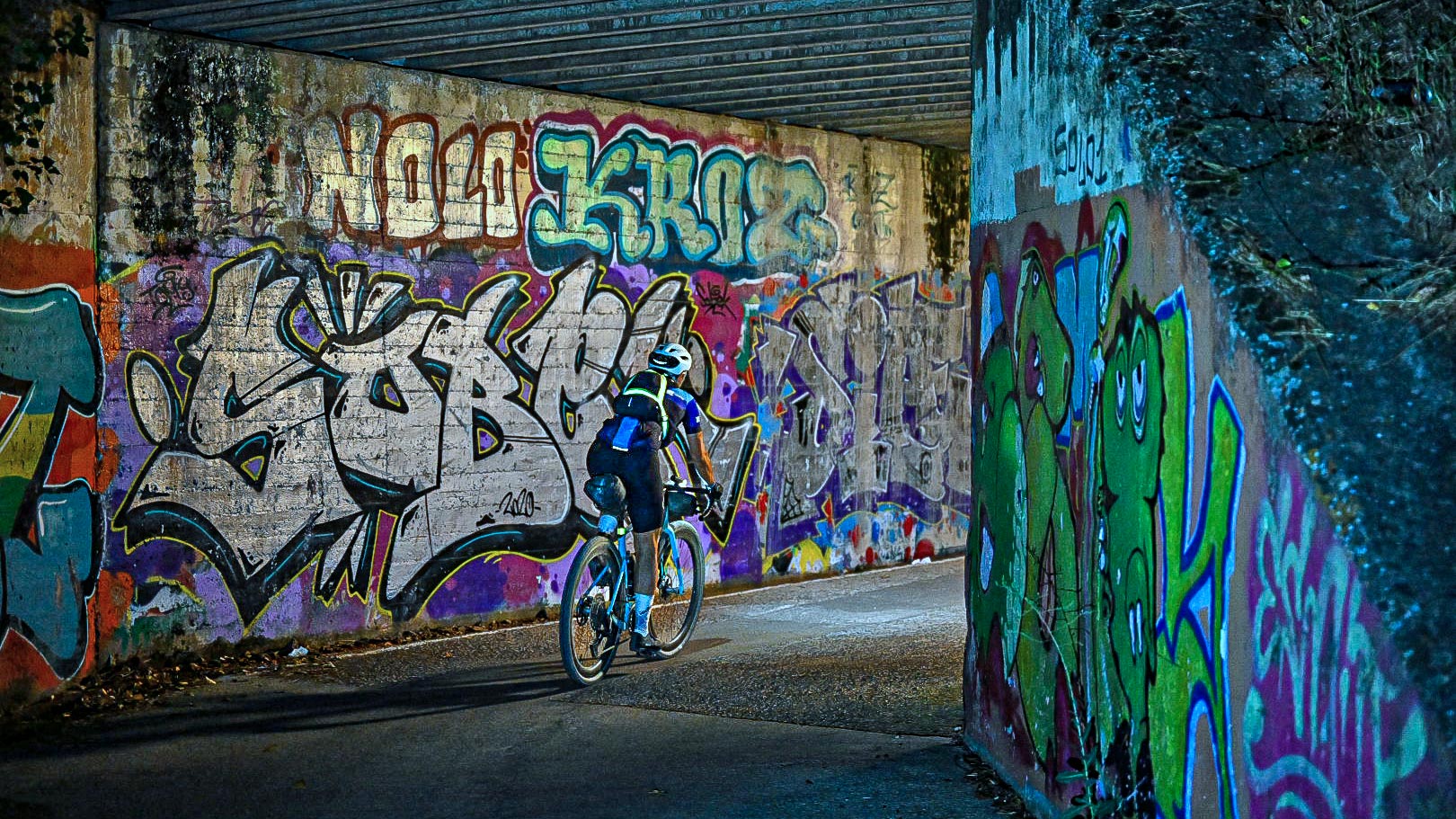
The Capitals route has been constructed with the riders' enjoyment in mind. We stamped brevet cards beneath the battlements of Lleida, rolled through ancient cobbled streets and on the final day, topped out on loose gravel to see Barcelona suddenly spread out below us. Those moments made me realise how much I would have missed had I been riding purely in survival mode.
“The route is a lovely mix of road, smooth gravel and enough challenging sections to keep you on your toes.”
On this occasion I couldn’t help but feel fortunate that we had decided to prioritise enjoyment over speed. There were still times of suffering. The riding was very hard and each day we were on the move for 10-12 hours. But the route is a lovely mix of road, smooth gravel and enough challenging sections to keep you on your toes. We both finished each day utterly exhausted and often dehydrated. Riding in the afternoons, heat management was a priority. It was almost impossible to drink enough, to consume enough electrolytes or to keep the core temperature controlled. But we got into a rhythm and were helped by the water stops (usually a public water fountain) being marked on the route by Pedalma; we never got into serious difficulty. It certainly helped to have a few hours each afternoon relaxing (usually with AC) in a small hotel, regrouping, reflecting and preparing for the next day.
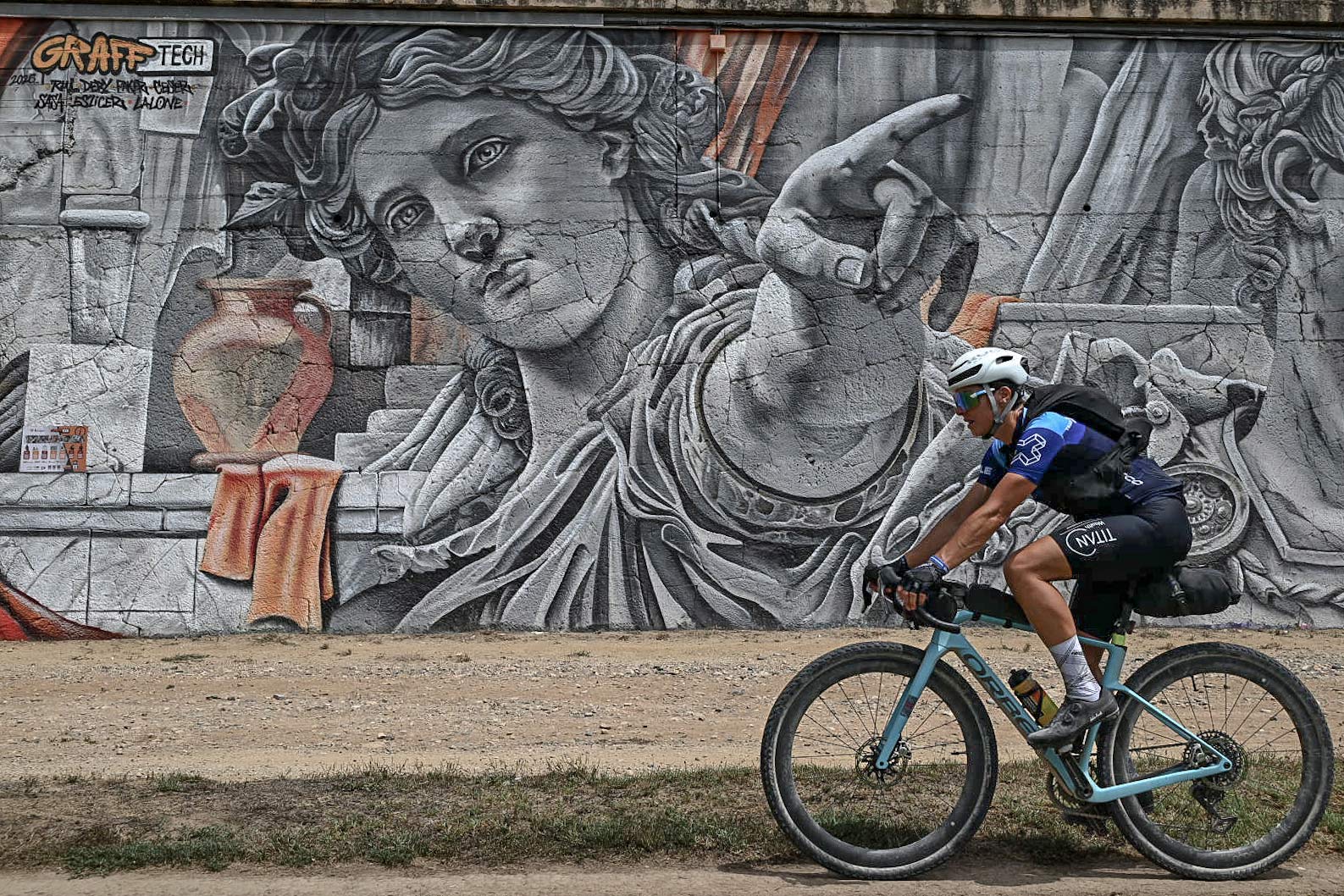
“I also wonder whether, in our rush to finish as quickly as we can, we sometimes miss the very thing we came for.”
I am still fascinated by people who ride these long events non-stop. I understand the attraction and I know there are lessons to be found in pushing beyond what feels possible. But I also wonder whether, in our rush to finish as quickly as we can, we sometimes miss the very thing we came for. Five hard days across Catalonia gave me more than those sixty sleepless hours once did, but this time I remember the sunrises, the villages, the friends we met, the glorious descents and the flowing gravel, the conversations and the landscapes rather than simply counting down the kilometres.
Three years ago, I finished, relieved that the event was over. This time I finished wondering where the next adventure would be.
Stages: The Capitals in 5 Days
- Barcelona to Prades - 185km, 3100m+
- Prades to Coll de Nargo - 177km, 1800m+
- Coll de Nargo to La Molina - 115km, 3600m+
- La Molina to Angles - 160 km, 2500m+
- Angles to Barcelona - 160 km, 2000m+