Dropper posts seem to have been around for decades in the mountain bike world, but many gravel riders consider them to be superfluous. If your gravel riding is limited to the ‘champagne’ variety, this is a valid viewpoint, but what if you’re regularly riding more technical terrain? Would a gravel dropper help you enjoy a spot of ‘underbiking’?
I ride with a group of friends who are always keen to try to challenge each other to tackle trails and obstacles we’ve never ridden before. Many of these features are not something you would typically ride on a gravel bike. There have been numerous times when attempting to ride down a sketchy descent recently when I’ve felt more than a little under-biked and on the edge of being out of control. In such situations, I’m reminded of what mountain biking was like in the 1990s, before the advent of dropper posts.
As well as being a keen gravel cyclist, I regularly ride a mountain bike (fitted with a dropper post) and when I switch from this to my gravel bike, it takes me a while to stop reaching for the remote lever to try and drop my saddle. This made me wonder if a) can you actually get a dropper post for a gravel bike? and b) what it might be like? I soon found that the answer to the first question was ‘yes’!
Gravel bikes seem to occupy that ‘sweet spot’ between road bikes and mountain bikes - enabling massive days out and big adventures on trails that regular road bikes wouldn’t be able to cope with and on which mountain bikes would be overkill and just too heavy. This is a delicate balance; it’s the efficiency of a gravel bike that is so important and this could easily be compromised by adding extra weight, so I was also keen to understand whether a gravel dropper would push this compromise too far.
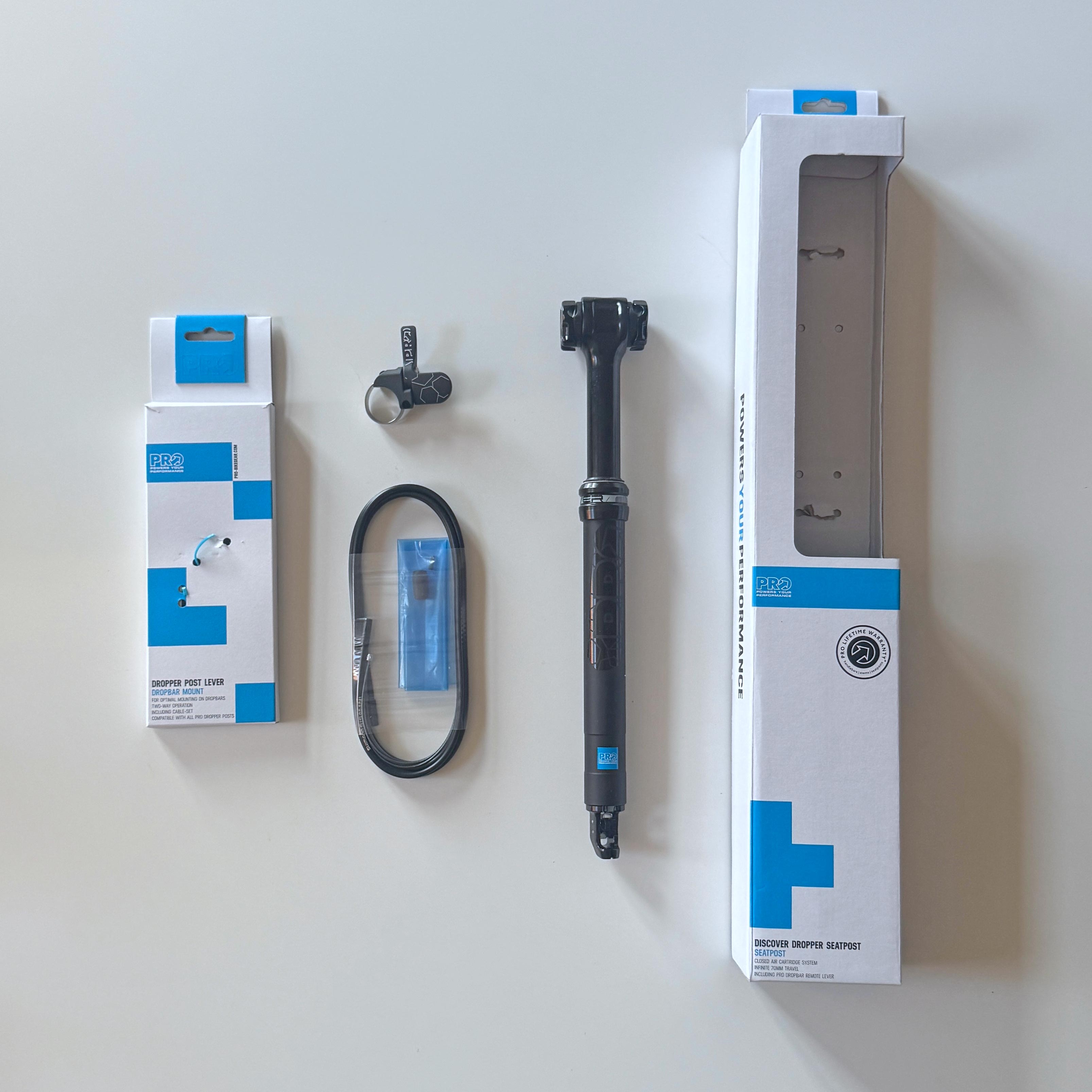
The majority of dropper posts on the market are designed for mountain bikes – they come in 30.9mm (or larger) diameter and have 150mm+ of travel. Whilst this is perfect for riding steep, technical trails, it’s overkill for what most gravel riders need. Fortunately, you can now find dropper posts designed for gravel bikes and PRO make one of those. Their Discover Dropper Post 70 (DDP) comes in a 27.2mm diameter and offers 70mm of travel. As well as the seatpost, most riders will likely need to buy the drop bar lever kit too, which includes a remote lever, cable inner, outer and tension adjuster. The DDP can be operated using one of Shimano’s GRX dropper-specific left-hand shifters, which would reduce weight and provide a ‘cleaner’ set-up, but the cost and initial set-up hassle might be a barrier if you don’t already own one.
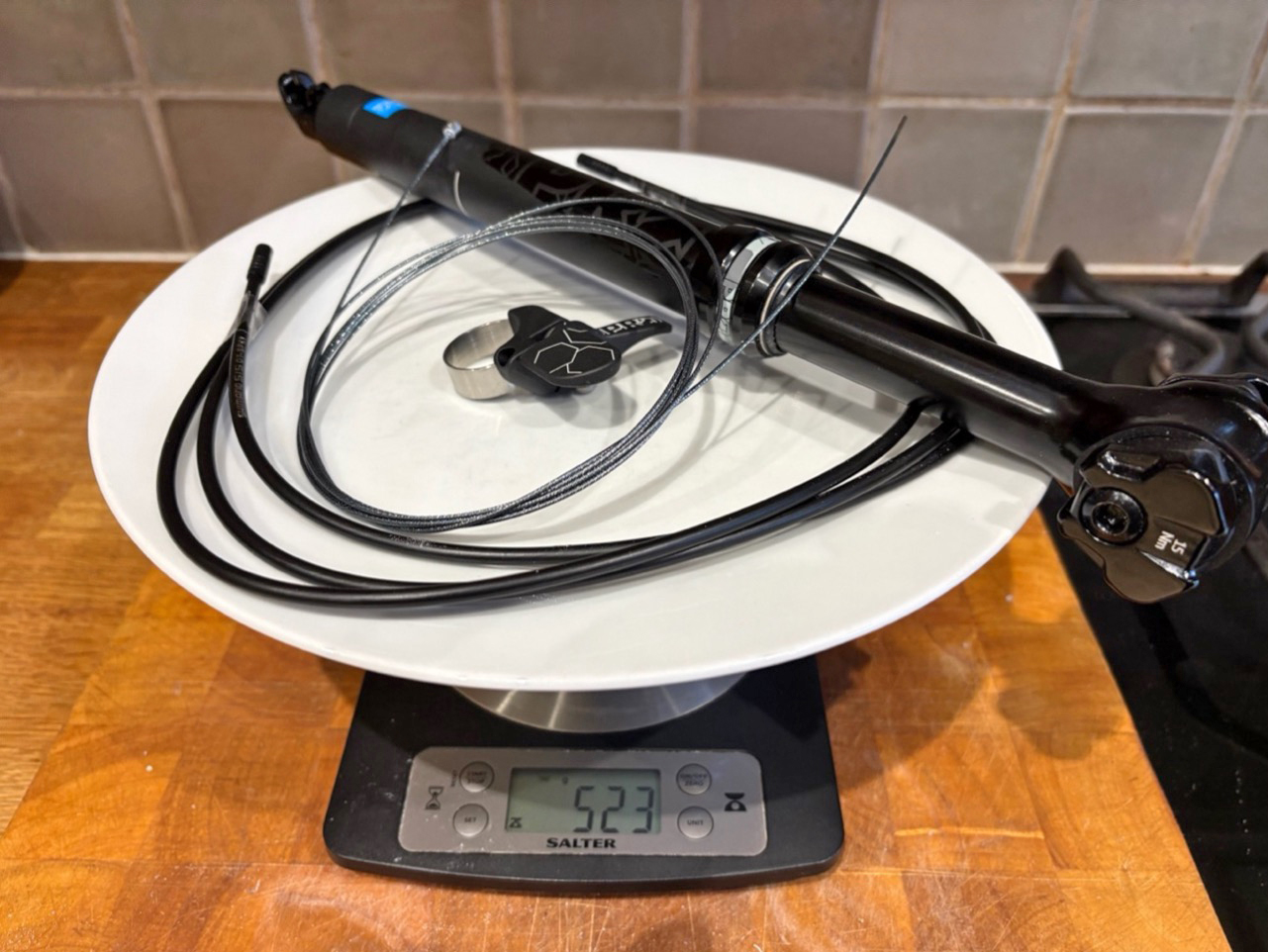
The parts of the DDP had a combined total weight of 523g. My bike had previously been fitted with an Ergon flex carbon seatpost, which weighed 240g, so there was a net increase of only 283g. This was less than I was expecting – basically a half-filled water bottle, so that was a positive start.
During the assembly process, I realised that if you intend to run the remote cable internally, you need to make sure that you have a spare cable port. I use a carbon gravel frame which has internal cable routing and I’m running a 1x drivetrain. This meant I had an unused port for the front derailleur cable that I could use for the dropper cable. But, I had to drill this out because the dropper cable needs a continuous outer, whereas a mechanically operated front derailleur outer usually stops at the cable port. Fortunately, I found that I had enough slack to pull the cable port out of the frame and use the hole to guide the drill bit (see photo). This ended up being easier than it sounds, but it’s always a bit unnerving to use power tools near anything expensive and carbon-based. PRO’s description of the DDP says it’s designed for internal cable routing only, so anyone running a mechanical 2x groupset or whose bike has external cable routing will be out of luck, unfortunately.
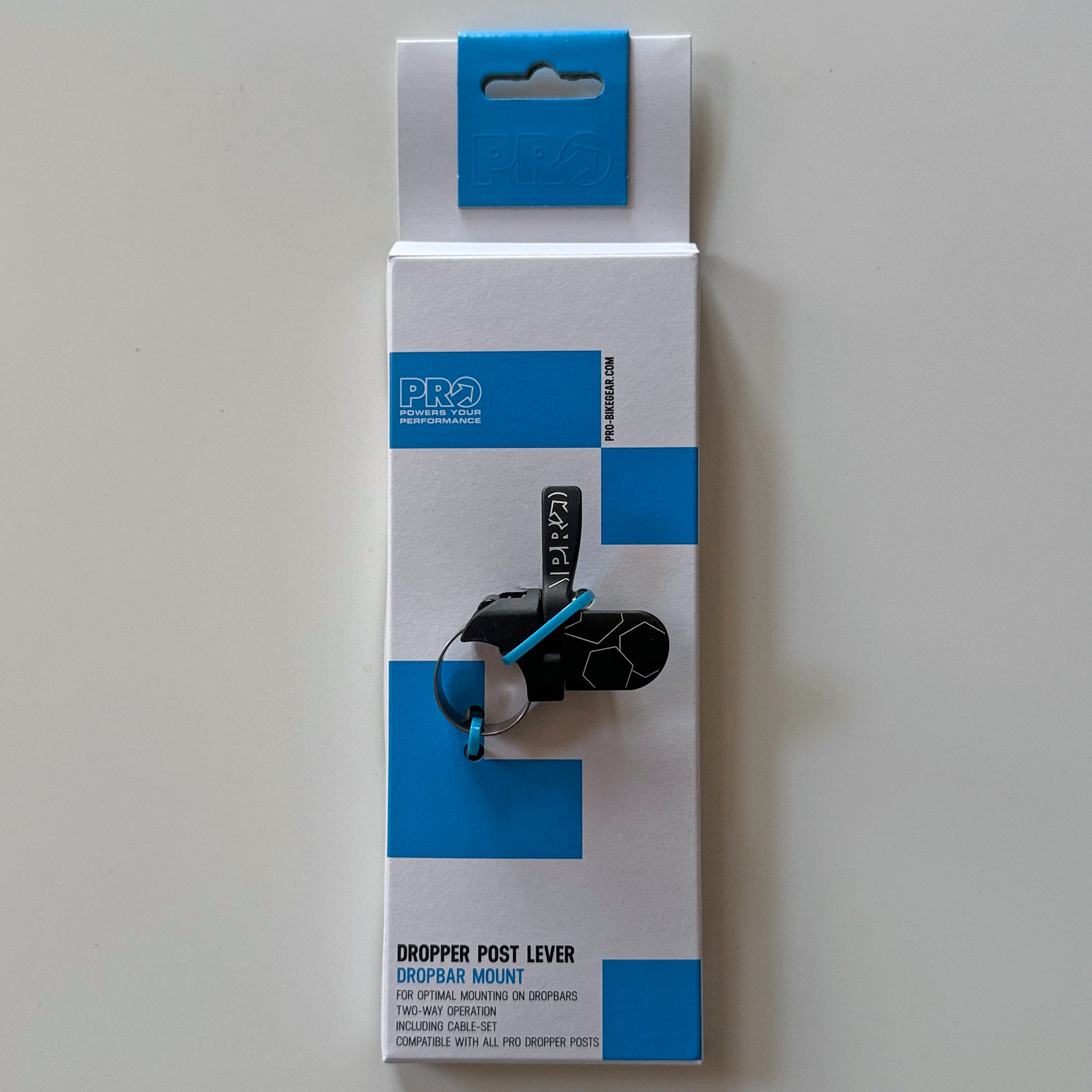
After installing the dropper post and running the cable, next you have to remove the bar tape from the left-hand side, fit the dropper post lever and rewrap the bars. On my first attempt, despite using a torque wrench, I still managed to over-tighten and snap the delicate aluminium bolt that clamps the dropper post lever to your handlebar. In hindsight, I realised that this was my ham-fistedness in not initially setting the torque wrench precisely enough. After I received a replacement bolt, it tightened snugly before I reached the 5Nm torque stated in the instructions. The bolt is of proprietary design and is not available separately from the lever kit, so it’s worth being careful when tightening it up!
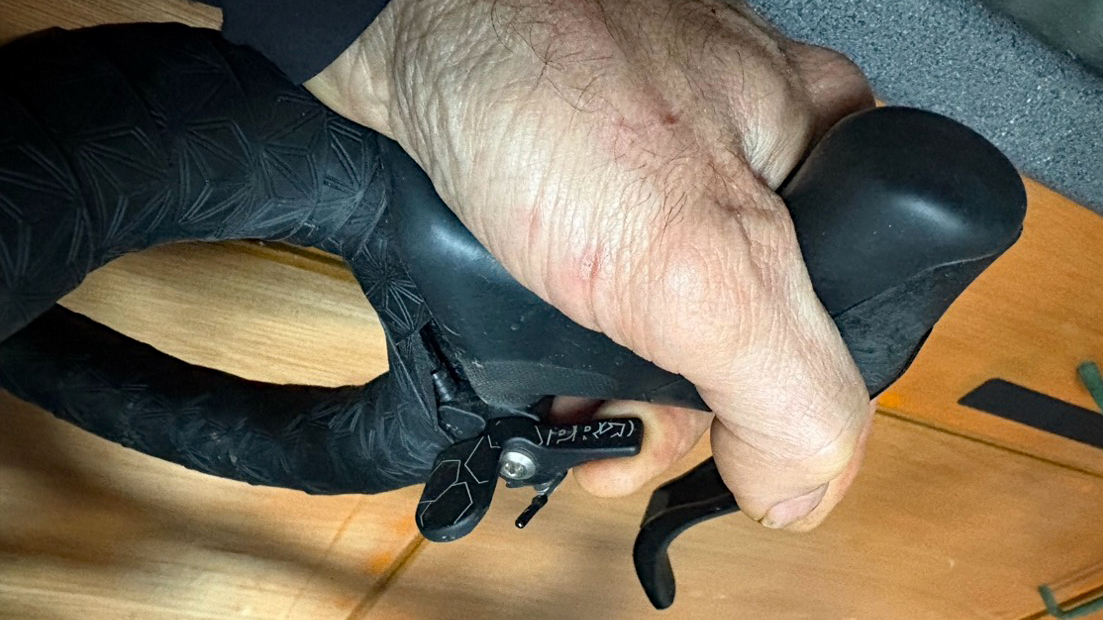
I’ve ridden multiple long gravel rides with the DDP fitted and it has been an interesting experience. The dropper actuates really quickly and smoothly and was faultless during the time of the trial. I found the ergonomics of the lever a little odd – it is a one-piece ‘rocker ‘ lever design, which can either be pulled or pushed, depending on where your hand is on the bar. I found that pulling with my second finger with my hands positioned on the hoods was the easiest way of actuating the seat post. I couldn’t really find any position where pushing down on the thumb pad worked satisfactorily. I also realised that when wearing thick gloves, the lever prevented me from using my usual hand position where I wrap several fingers under the brake lever hood - I noticed this most when I was climbing. I got used to altering my hand position to enable me to operate the dropper post lever, but the replacement 2x shift lever I mentioned earlier might be a better (more ergonomic) solution.
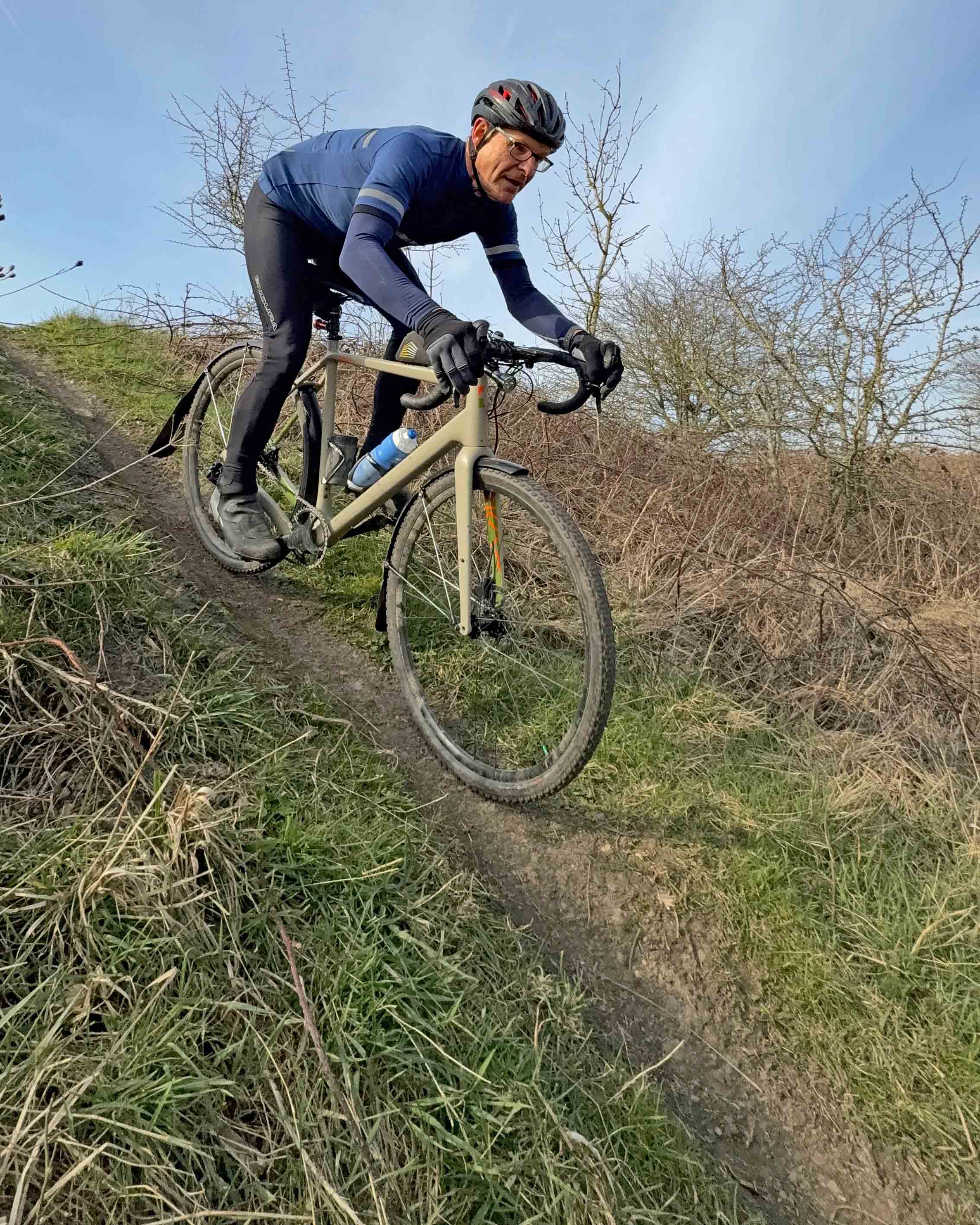
In use, it was surprising that only 70mm of travel (versus the 150mm travel on the dropper fitted on my mountain bike) still made quite a significant difference. Tricky technical descents felt more secure as I could get my weight back and move my centre of gravity lower on the bike – this meant I felt more ‘in’ rather than ‘on’ the bike. I also found myself using the DDP on off-camber corners, anywhere that felt slippery or where I was in need of a bit more control, as it just brings you closer to the ground and a little further back. While it takes a good few rides to get used to using it, I found that I used it on a wider range of terrain than with my mountain bike dropper, which I generally only use on descents.
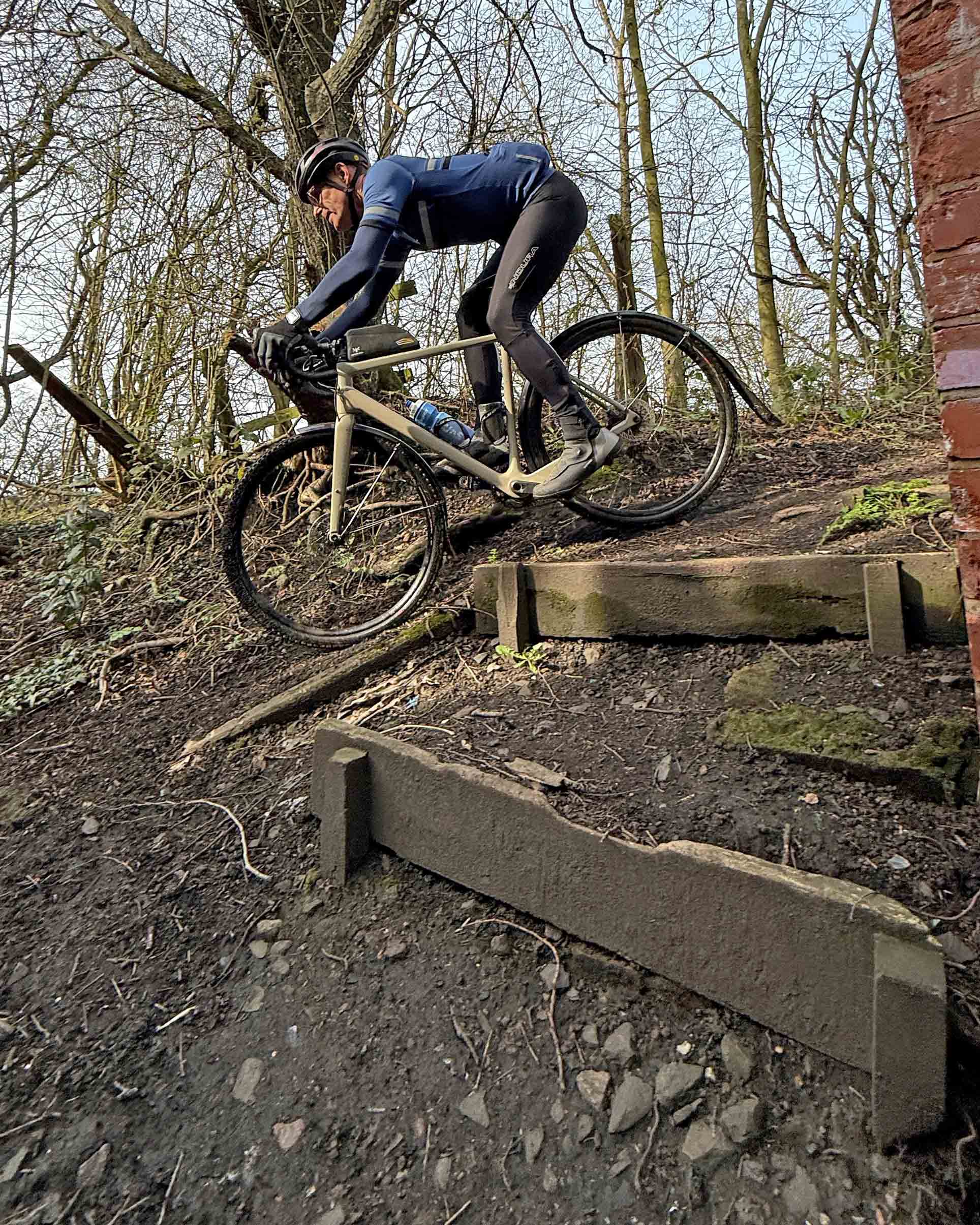
Reflecting on the difference that this seat post has made to my riding, it has definitely helped make tricky descents safer and I have felt more in control. I can also see a ‘user case’ for riders with less flexibility or limited mobility – it would allow them to drop the saddle when getting on/off their bike, making this process easier/lower risk. While the DDP really helps when riding more technical trails, these make up a small proportion of the riding I typically do. If you're fortunate enough to live/ride somewhere more mountainous or with a greater proportion of technical terrain in your typical rides, then I can see that you would use the dropper significantly more frequently.
I appreciate the ability to drop the saddle when I need it, but the flipside is that the design of the DDP means it is significantly stiffer than a standard seatpost (and dramatically stiffer than my flexible Ergon post). At the end of a long ride, I have noticed how much more achy/tired I feel with the DDP fitted in comparison to finishing a ride with the flexible carbon seatpost fitted. In an ideal world, it would be possible to buy a dropper post which also offered some cushioning/compliance over rougher terrain. If that were possible, I would definitely want one, but I think if I had to choose between the two, for the moment, I will be sticking with my existing flexible seat post.
The RRP of the PRO Discover Dropper Post 70 is £199 (or local equivalent currency) and the Dropper Post Lever is £59.99. Both are available globally from Shimano/PRO dealers. You can find out more details here.