Quite remarkably, Stan's has been making tubeless tyre sealant since 2000. Much like brands such as Hoover, Land Rover, Velcro, Sellotape and, of course, Google, some products become so ubiquitous that their brand name effectively becomes synonymous with an entire product category. Stan's is arguably one of them. Their original tubeless sealant has found its way into the tyres of millions of riders around the world, before being joined by the RaceDay variant in 2016. This year, Stan's has added a third option to its range: Rolled Gold, designed for "fast sealing in low-volume, high-pressure road and gravel tyres". Olly has been putting it through its paces and reports back with his findings.
Although it might sound unlikely, I can still vividly remember buying and setting up my very first set of tubeless wheels and tyres. It was back in 2003, when I was working in the French Pyrenees as a mountain bike guide. Mavic was based nearby in Toulouse and, at the time, prices were so reasonable that even a poorly paid MTB guide could afford to buy decent kit. I bought a set of Crossmax SL wheels and some Michelin tubeless tyres to go with them. Although the learning curve involved in getting everything set up was quite steep, that first ride was a revelation and I've been hooked on using tubeless tyre setups ever since. I'm less sure when I first tried Stan's sealant, but it can't have been that long afterwards. Apart from the occasional dabble with rival products, I've been a card-carrying fan ever since.
I like to mix up my riding and, although the vast majority of my rides are gravel-based, I still spend a good amount of time on the road and occasionally dig out my XC MTB to remind myself just how much fun it is. I don't ride downhill or enduro, so I've never really seen the need to use Stan's RaceDay sealant. Their original sealant seemed to do the job perfectly well and, although, like most riders, I've experienced the occasional tubeless puncture, 99% of the time it's done a great job of sealing the hole without too much faff.
When Stan’s launched their new Rolled Gold (RG) sealant back in the summer, I was intrigued. They describe it as “Higher pressure. Faster sealing. Stan’s RG is a premium, purpose-built tubeless sealant designed for road and gravel tyres, optimised for delivering high-speed sealing in pressure ranges of 35-100 psi.” Although I don’t ride pressures anywhere near as high as those, I figured that sealant designed specifically for road and gravel tyres had my name all over it, so I requested a set to test.
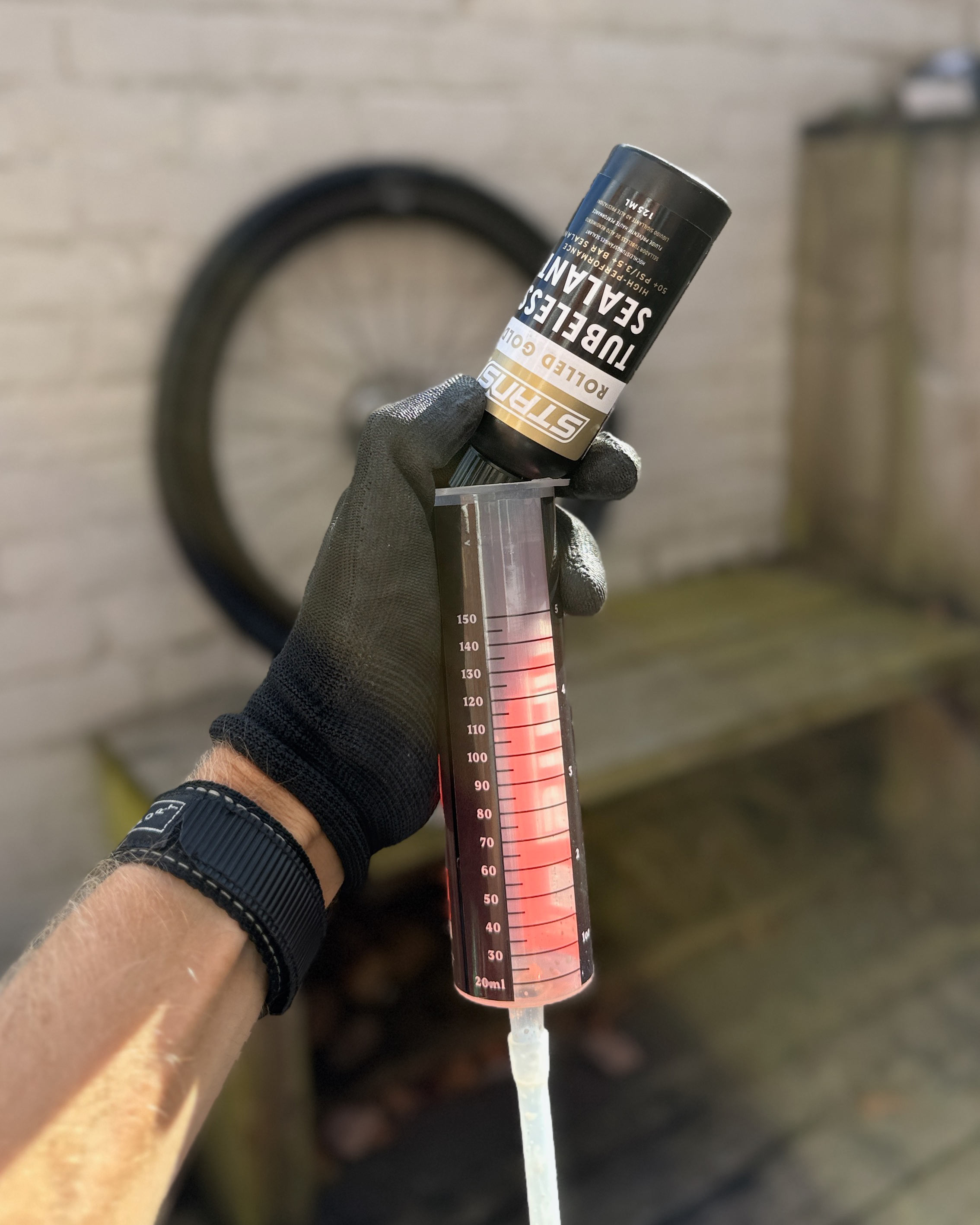
The team at Upgrade, who are the Stan’s distributor in the UK, very kindly sent me a mix of different-sized bottles of RG and one of Stan’s Tubeless Sealant Injector tools. I had a brand-new set of top-of-the-range gravel tyres in for testing (more news on those soon), so I figured it was the perfect opportunity to try the RG sealant at the same time.
Stan’s list the following features for the RG sealant:
- Designed for road and gravel tyres, providing superior protection in high-pressure, low-volume applications
- High-performance formula allows for lower-volume fill; sample sealant dose for a 700c x 28mm tyre:
- Stan’s Rolled Gold: 35ml
- Stan’s Original: 50ml
- Competitor Average: 55ml
- Quick-acting formula works fast to repair punctures up to 7.8mm @ 100 psi and preserve air pressure
- Compatible with valve injection installation, using Stan’s Sealant Injector or 125ml and 60ml bottles
- Biodegradable, water-based, natural latex formula
- Formulated, produced, and bottled in the USA by Stan’s
Stan’s also have a chart on their website giving guidance on how much sealant they recommend you use:
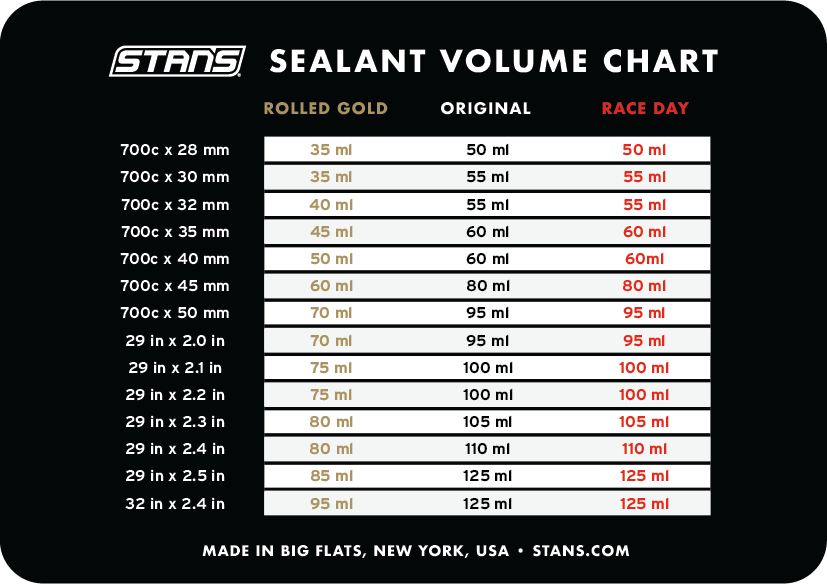
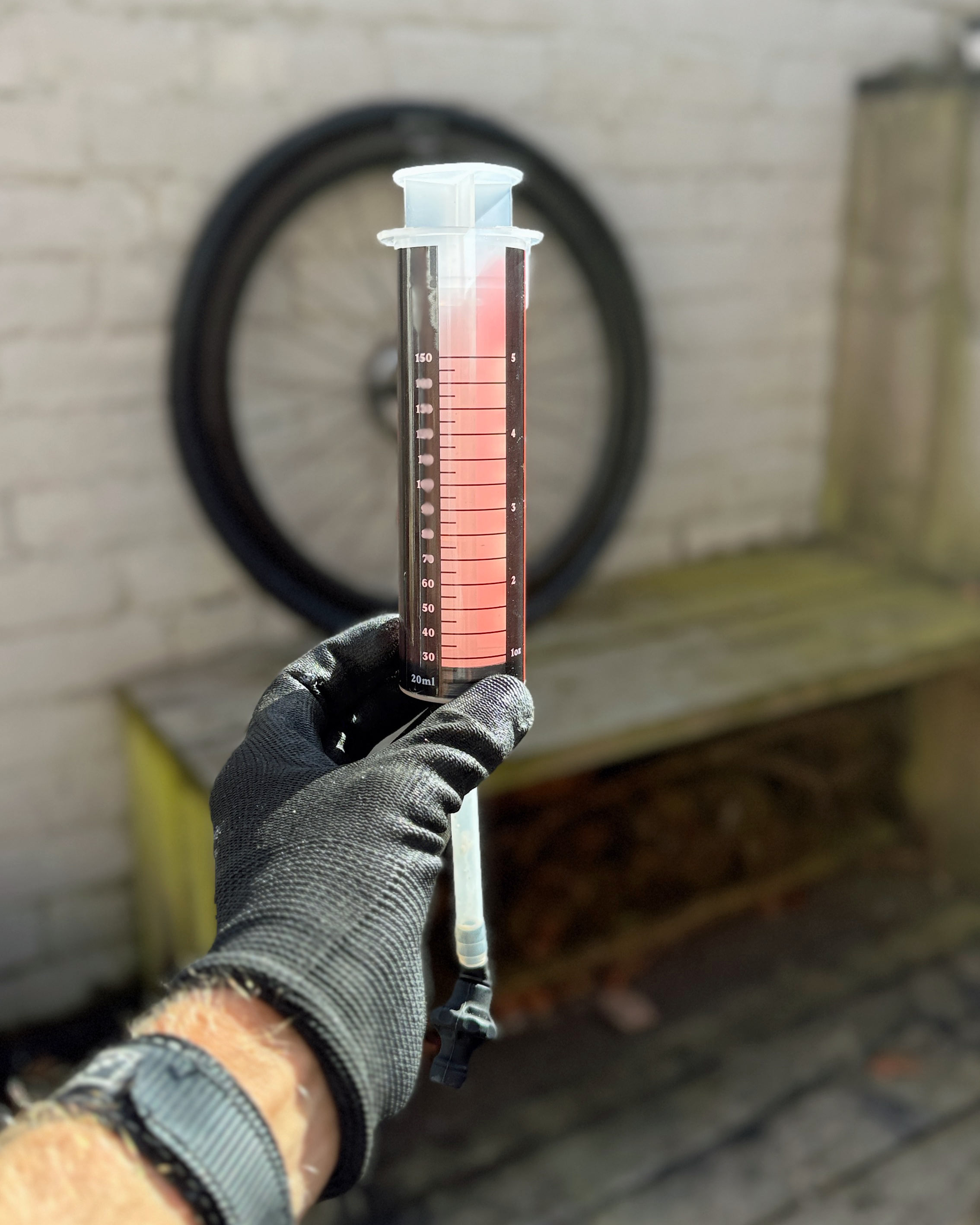
The tyres that I was fitting were 700x50, so based on their chart, I would need 70ml of sealant. I fitted the tyre, removed the valve core, gave the bottle of sealant a really good shake (as recommended on the back), emptied the sealant into the injector tool, fitted it to the valve stem and injected it smoothly into the tyre. All very predictable and unexciting.
I got the second tyre mounted up, removed the core, pulled the injector tool apart to refill it, marvelled at how large the sealant particles were (visible on the black rubber end of the injector tool in the photo above), filled up the injector with 70 ml of sealant and fitted it to the valve stem. As I started to push the sealant into the valve, there was a really noticeable back pressure and the injector plunger barely moved. I stopped pushing on the injector, wiggled the flexible hose connecting the injector to the valve stem and then tried again with a little more force.
With a rather loud pppfffffffttttt noise, the flexible tube suddenly detached itself from the valve stem, liberally spraying RG sealant over the tyre, wheel and workbench. I may have said "f*cksticks" at this point. You wouldn't think that 70ml of tubeless sealant would amount to such a large volume, but even though only around 50% had escaped from the injector tool, the resulting mess was quite impressive.
In some ways, I was impressed. It demonstrated just how quickly the RG sealant coagulates (which is, after all, exactly what you want a tubeless sealant to do). However, it also highlighted the double-edged sword of this characteristic: the sealant had already become sufficiently solid to block either the injector or the valve stem in the time it took me to fit a new tyre to the wheel (around two minutes, if I'm being generous). It made me wonder what longer-term problems this might cause with clogged valve cores, potentially making something as simple as topping up the tyre pressure considerably more problematic than it should be.
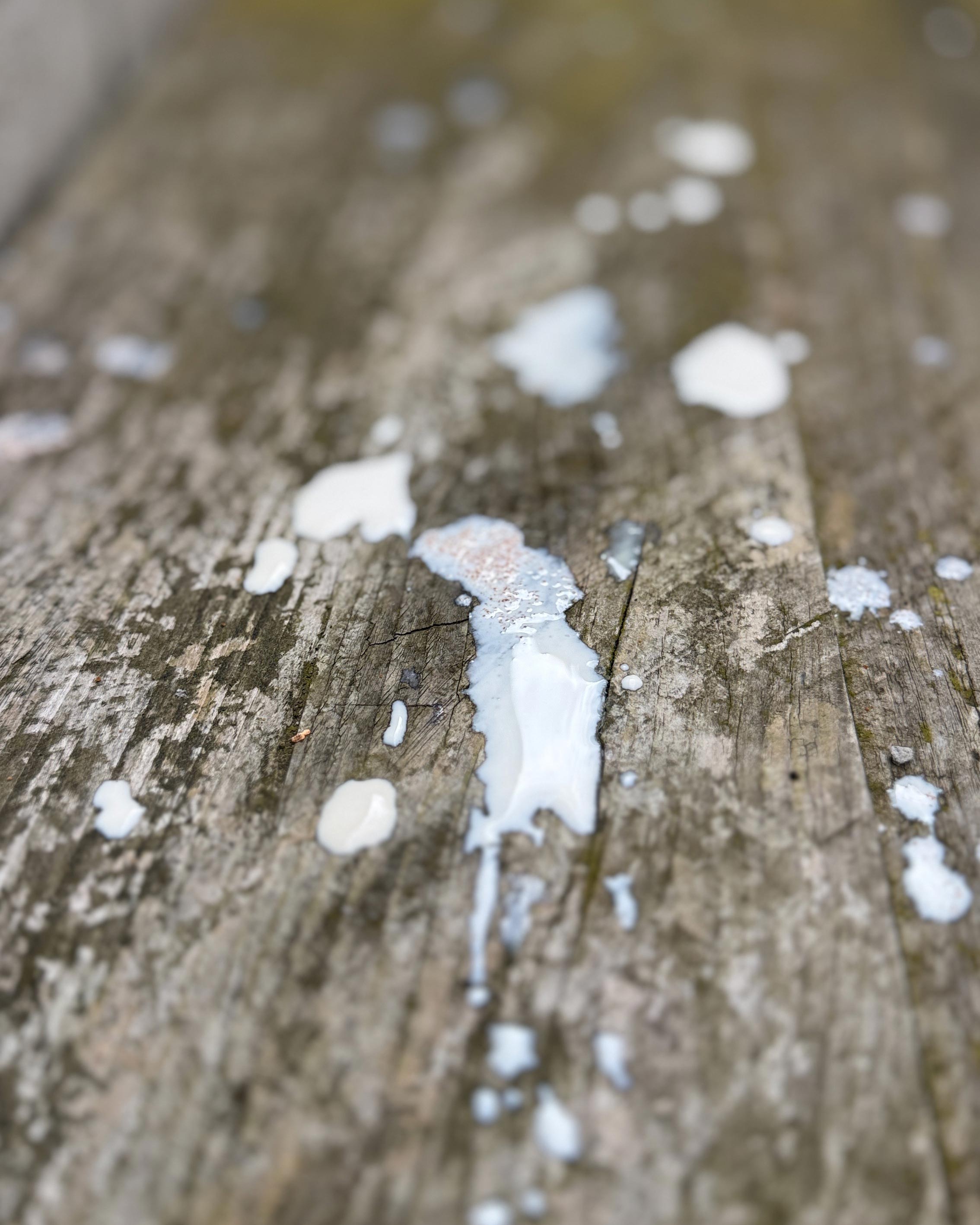
Before attempting to reuse the injector tool, I cleared the valve stem and injector tube using an old spoke. I was genuinely amazed by just how particulate-dense the sealant was. You can see the size of the particles in the photo above. Even after poking around with the spoke, I wasn't confident that I'd managed to remove all the residue, so rather than risk wasting more sealant and creating an even bigger mess, I partially unseated the tyre's sidewall and poured the appropriate amount of freshly shaken RG sealant directly into the tyre.
I contacted Upgrade to share my feedback, and they put me in touch with the Stan's team in the USA, who came back with some useful advice:
Best practices:
Shaking Rolled Gold is key to success - Everyone gets tired of me saying it, but with the high particulate count in Rolled Gold, it is more important than ever to shake the bottle aggressively and install immediately. We use a variety of particulates, each with a different density, and they need to be well agitated to make the sealant as homogeneous as possible.
Using an Injector with Rolled Gold - immediate injection through the valve is required. The plunger should be removed from the injector, the valve core removed from the valve, and the injector-to-valve stem can already be in place before shaking and pouring the sealant into the injector body. The particles settle quickly and can plug the split valve if allowed to fall out of the liquid suspension.
Common issues:
Valve plugging is primarily related to not shaking the sealant well enough, or allowing it to sit and settle again with either an Injector or from the 60 or 125ml bottles. However, it can also result if the valve base is not clean or an insert is blocking some or all of the outlet area. Sealant loves to stick to rubber, and the valve base can become partially or fully restricted. If there is a persistent plugging issue, a thorough inspection and cleaning may be needed.
Trying to inject through a valve core of a Filmore valve is NOT RECOMMENDED for any variety of Stan's sealant or most any other brand of sealant. Users will try, but the small passages plug too easily or strain out the particulate. In the case of the Filmore valve, sealant and particles will stick to the o-ring in the valve base that is required for sealing.
Presta valve cores plugging - in normal use, some sealant drops will inevitably find their way back up the valve stem and potentially plug the valve core. Most are willing to simply change them periodically, but they can be cleaned as well.
They also shared a link to this useful video:
Based on their advice and the recommendations in the video, there are a couple of things I should have done differently:
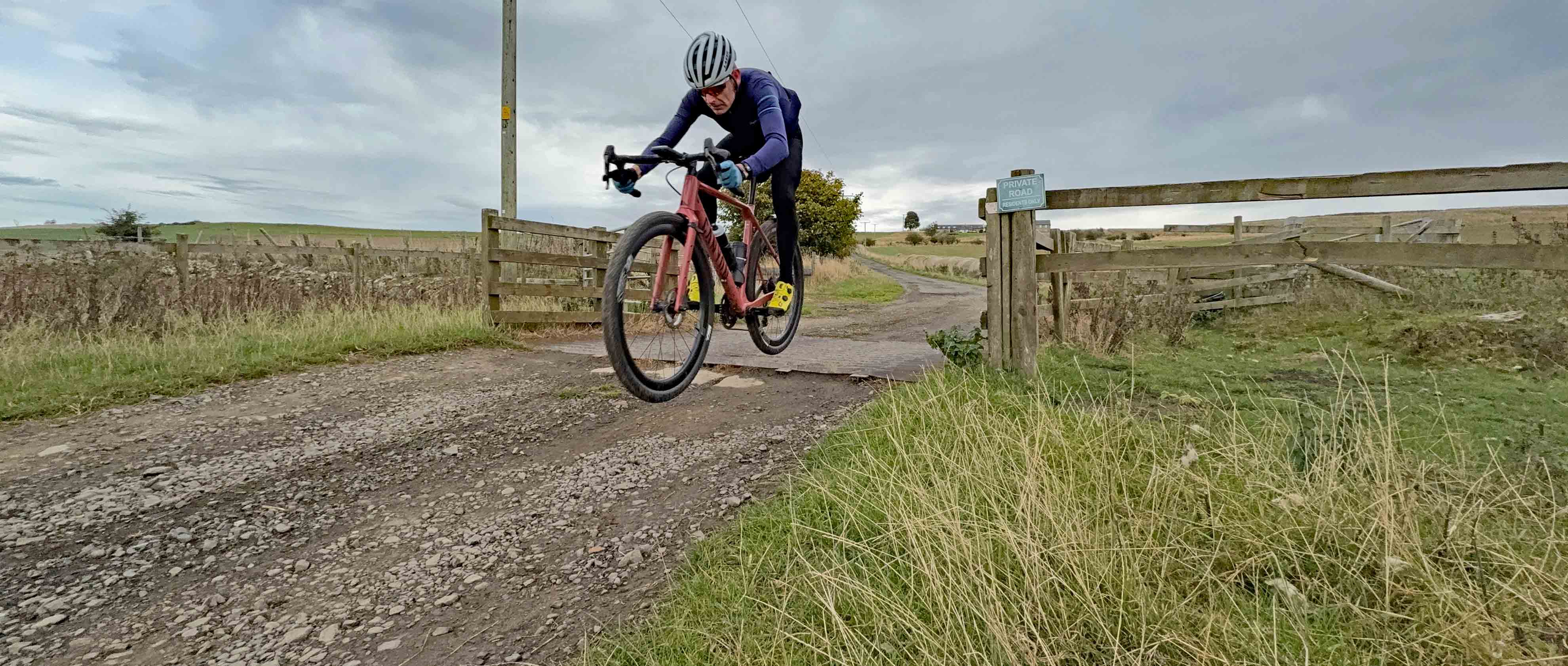
Since first installing the RG back in September, I've tried it out in a couple of different tyre sets and have covered more than 1,500km with the sealant in my tyres. I've really put the tyres through their paces in a variety of environments, including playing Russian roulette with local farmers after they've been hedge-cutting and left thorns liberally scattered across the full width of some local roads.
Testing the sealing capabilities of the RG is difficult without physically stabbing holes in my tyres (not something I'm particularly keen to do when tubeless tyres are so expensive), but I'm pleased to report that I've had zero (obvious) punctures, so the RG sealant appears to be doing its job perfectly. My concerns about the valve cores clogging have proved justified - it's noticeable that the tyres running RG sealant have suffered more clogged cores than those using Stan's original sealant.
Overall, my experience has been somewhat mixed. Once installed, Stan's Rolled Gold sealant has done an excellent job of keeping me puncture-free. However, it's noticeably more faffy to install than Stan's original sealant and it seems to have clogged up my Presta valve cores more quickly than I would have liked.
If you're looking for maximum puncture protection for tubeless gravel and road tyres, Rolled Gold is definitely worth considering. However, I think I'll probably be going back to Stan's original sealant for future tyre installations.
You can find more information about Stan’s Rolled Gold sealant on their website. Prices start from £5.50 (or equivalent local currency) and you can find Stan’s in most good bike shops or directly from Upgrade in the UK